Carpet Cleaner Buying Guide
Type
The single most important decision you'll make. "Carpet cleaner" covers everything from 25-pound water-pumping machines to a bottle of spray under your sink, and buying the wrong format is the fastest way to end up with an expensive closet ornament.
- Upright - The classic deep cleaner. It sprays solution, scrubs with rotating brushes, and vacuums the dirty water back up. Best for whole rooms, wall-to-wall carpet, and households that clean on a schedule. Heavy and storage-hungry, but nothing else pulls that much grime out of a carpet pile.
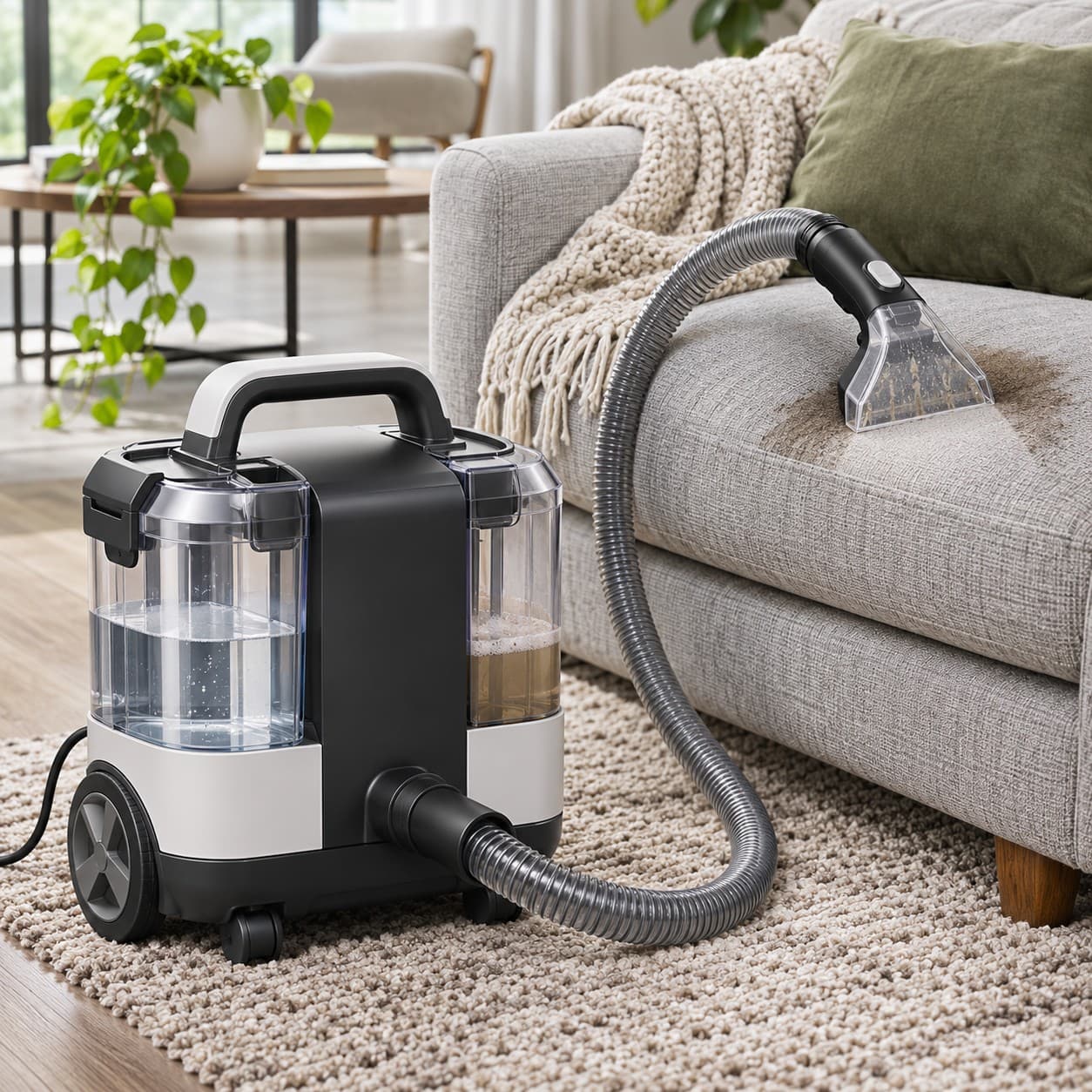
- Portable Spot - The breakout star of the category. Compact tank-and-hose units designed for accidents: pet messes, toddler spills, car seats. They use the same spray-scrub-suction process as an upright on a small scale. If you have pets, this is often the smarter first buy.
- Handheld - Smaller and lighter than a spot cleaner, often cordless. Great for stairs, upholstery, and quick grabs, but limited tank size means frequent refills.
- Steam - Uses hot vapor rather than chemicals, excellent for sanitizing and killing dust mites. Note that true steam cleaners don't extract water, so drying takes longer and they're less effective on deeply embedded dirt.
- Wet Dry Vacuum - A hybrid that washes hard floors and vacuums at the same time. Fantastic on tile and hardwood, but generally weaker on carpet pile than a dedicated extractor.
- Commercial Extractor - Heavy-duty machines with larger tanks and stronger suction for offices, rentals, or very large homes. Overkill for a two-bedroom apartment.
- Spot Remover Spray - The $5-$15 bottle that handles 80% of everyday emergencies. Every home should have one regardless of what machine they own.
- Shampoo Solution - Refill formula for machines. Check that it's matched to your machine type, since the wrong foam level can damage pumps.
- Foam and Powder - No-machine options. Foam works on upholstery and small areas; powder sprinkles on, absorbs odor, and vacuums up. Both are convenient but surface-level.
- Cleaning Pods - Pre-measured formula capsules that eliminate guesswork and spills. Slightly pricier per use, much harder to mess up.
A realistic setup for most homes: one spray bottle for emergencies plus either a portable spot cleaner (pets, kids) or an upright (large carpeted areas). Renting an upright a few times a year is a perfectly smart alternative to buying one.
Brand
This category has a few true specialists and a lot of trusted chemical names. Brand matters most for machines, where parts availability, warranty support, and formula compatibility come into play.
- Bissell - The dominant name in home carpet cleaning and the inventor of the portable spot cleaner category. Huge range from handhelds to premium uprights, excellent parts availability, and a deep bench of pet-focused models. The default recommendation for most shoppers.
- Hoover - Bissell's longtime rival, strong on uprights and wet-dry machines, often slightly cheaper at similar spec. Look here if you want deep-clean power without paying the premium.
- Rug Doctor - Known for rental machines and the strongest suction in the consumer space. Their retail units and formulas are built for serious, infrequent deep cleans.
- Shark - Newer to wet cleaning but brings strong engineering and self-cleaning conveniences from its vacuum line.
- Resolve - The supermarket workhorse for sprays, foams, and powders. Inexpensive, widely available, and genuinely effective on fresh stains.
- Folex - A cult favorite. A simple, nearly odorless instant spot remover with an almost fanatical following for lifting stains others leave behind.
- Rocco & Roxie - Enzyme-based pet stain and odor eliminator with strong reviews for urine, which is the hardest smell to truly remove.
- Nature's Miracle - Another enzyme specialist aimed squarely at pet accidents, including repeat-offender spots.
- OxiClean and Carbona - Oxygen-powered and targeted stain chemistry. Carbona in particular makes stain-specific formulas worth keeping for wine or grease.
- Chem-Dry, Zep, and Simple Green - Professional-leaning formulas. Zep and Simple Green lean commercial-strength; Chem-Dry draws on professional service experience.
- Karcher, Tineco, Dreame, and Uwant - The tech-forward crowd. Expect self-cleaning cycles, heated drying, digital displays, and smart dirt sensors at higher price points.
- Black+Decker, Vacmaster, and Amazon Basics - Value picks. Reasonable performance for occasional use and light messes.
- Puracy and Scotchgard - Puracy for plant-based, low-tox cleaning; Scotchgard for post-cleaning stain protection that keeps new spills sitting on top of fibers.
For machines, stick with Bissell, Hoover, or Rug Doctor unless you specifically want the tech features of Tineco, Dreame, or Shark. For bottles, buy by stain type: enzyme brands for pets, oxy brands for food and drink, Folex for mystery spots.
Mess Type
Shop backwards from your actual problem. Cleaners are chemically tuned for specific messes, and a formula that annihilates red wine may do very little for cat urine.
- Pet Stain and Pet Odor - The biggest driver in this category. Look for products that explicitly state odor elimination, not just stain removal, because masking a smell invites repeat marking.
- Urine - The toughest mess there is. Urine crystallizes deep in carpet backing and padding, so you need an enzyme formula that digests the uric acid rather than a surfactant that just lifts color.
- Pet Hair - Requires mechanical help, not chemistry. Look for machines with specialized pet brush rolls or hair-collection tools, and vacuum thoroughly before wet cleaning or you'll create matted sludge.
- Wine & Coffee - Tannin stains respond best to oxy or hydrogen peroxide formulas. Speed matters more than product here; blot immediately and treat while wet.
- Grease & Food - Needs degreasing surfactants. Standard pet formulas often underperform on oily stains.
- Mud & Dirt - Let it dry completely, vacuum it up, then deep clean. Attacking wet mud spreads it into the fibers.
- Vomit - Combines protein, acid, and odor, so enzyme formulas are again the right call.
- High Traffic - Entryways and hallways need deep extraction rather than spot treatment, plus stain protection afterward to slow re-soiling.
- Allergen - Steam cleaning and hot-water extraction both help with dust mites and dander. Look for allergen-specific claims if anyone in the house has sensitivities.
- Smoke Odor - Requires odor-neutralizing chemistry and usually multiple treatments, since smoke residue settles into every soft surface in a room.
Most households need exactly two products: an enzyme cleaner for anything biological and an oxy cleaner for anything spilled from a cup or plate. Everything else is a bonus.
Formula Type
The chemistry label tells you how a product works and who it's safe around. This is where a little label literacy saves money and protects your carpet.
- Enzyme - Contains live cultures that break down organic matter at the molecular level. The only real answer for urine, vomit, and lingering pet odor. Needs dwell time, so don't blot it away after thirty seconds.
- Oxy - Oxygen-based brightening power that lifts colored stains from food, drink, and dirt. Excellent on light carpets; test first on dark or wool fibers.
- Hydrogen Peroxide - Strong stain-lifting with a mild sanitizing effect. Very effective, but always spot-test since it can lighten some dyes.
- Concentrated - Dilute before use. Far better value per clean and less packaging waste, but you must follow the mixing ratio exactly; too strong leaves sticky residue that attracts dirt faster than before.
- Ready To Use - Pre-mixed and foolproof. Ideal for spot sprays and casual users.
- Low Foaming - Essential for machines. Excess foam can damage the motor and leaves residue behind. Never pour dish soap into a carpet cleaner.
- Stain Protection - Leaves a repellent layer so future spills bead on the surface. Worth applying to entryways, dining areas, and kids' rooms after a deep clean.
- Pet Safe and Kid Safe - Indicates lower-toxicity ingredients once dry. Always confirm the surface is fully dry before letting anyone back on it.
- Safer Choice Certified - An EPA-backed label meaning every ingredient has been reviewed. The most trustworthy green claim on a shelf full of vague ones.
- Plant Based - Derived from renewable ingredients. Usually gentler in scent and fumes, sometimes needing a second pass on heavy stains.
- Bleach Free - Safer for colored and patterned carpet. Check this if you have anything other than beige.
Match the chemistry to the mess, verify low-foaming if it's going in a machine, and always spot-test in a closet corner before treating the middle of the living room.
Surface Use
Few machines do everything well. Checking approved surfaces prevents the expensive mistake of soaking something that was never meant to get wet.
- Carpet - The baseline. Verify pile compatibility; high-pile and shag carpets need machines with enough brush clearance, and wool needs gentle, bleach-free formulas.
- Area Rug - Watch for color bleed and backing damage. Cleaning on top of hardwood also risks moisture reaching the floor, so place a barrier underneath.
- Upholstery and Couch - Requires a dedicated upholstery tool with gentler suction. Check your furniture's cleaning code first; a "S" code means solvent-only and water will leave rings.
- Mattress - Light extraction only, and allow a full day of drying with airflow. Trapped moisture in a mattress is a mold risk.
- Stairs - The hardest surface to clean. You need a lightweight machine or a portable unit plus a long hose, or you'll be hauling a 20-pound tank up every step.
- Car Interior - Favors cordless or portable units with long hoses and crevice tools. Confirm reach from your driveway outlet if the model is corded.
- Pet Bed - Usually better washed, but spot cleaners handle beds too bulky for the machine.
- Hard Floor - Only wet-dry vacuums and certain multi-surface machines qualify. Never use a carpet extractor's brush roll on unsealed wood.
- Tile & Grout - Steam cleaners shine here, lifting grime from grout lines that mopping just pushes around.
Write down the surfaces you actually need to clean before you shop, and prioritize machines that cover all of them with included tools rather than optional accessories.
Features
Features separate a machine you use monthly from one you dread dragging out. These are the ones that genuinely change the experience.
- Dual Tank - Separate clean and dirty water reservoirs. Non-negotiable on any real extractor; single-tank designs recirculate filth back onto your floor.
- Self-Cleaning - Runs a rinse cycle through the hose and brush after use. The single best quality-of-life feature, because manually cleaning a dirty-water system is the reason most machines get abandoned.
- Heated Drying and Express Dry Mode - Warms air or solution to cut drying time from hours to well under one. Hugely valuable if you need the room back quickly or live somewhere humid.
- Auto Mix - The machine blends water and formula at the correct ratio automatically. Prevents over-concentration and the sticky residue that follows.
- Antimicrobial Brush Roll - Resists odor and bacteria buildup in a part that stays damp. Small feature, meaningful smell difference over time.
- Dual Brush Roll - Two counter-rotating brushes scrub more thoroughly and in more directions than a single roll.
- Edge Cleaning - Lets you clean right up against baseboards and furniture legs, avoiding the dark border that gives away a half-done job.
- Swivel Steering - Lets you maneuver around table legs instead of lifting and repositioning a heavy, water-filled machine.
- Lightweight and Compact - Directly predicts how often you'll actually use it. If storage is a closet shelf and your home has stairs, weight beats raw power.
- Extra Wide Path - Covers more floor per pass. Great for large open rooms, clumsy in tight hallways.
- Quiet - Worth seeking in apartments or homes with nervous pets, though wet extraction is never truly silent.
If you only chase two features, make them dual tank and self-cleaning. Heated drying is the best upgrade after that, and everything else is comfort.
Included Tools
Attachments determine how much of your home a machine can actually reach. Buying them separately later usually costs more than choosing the better-equipped model upfront.
- Upholstery Tool - A wide, flat head for sofas, chairs, and mattresses. The most-used attachment in most households.
- Tough Stain Tool - A smaller head with stiff bristles and concentrated suction for set-in spots. Worth having if your carpet sees real abuse.
- Pet Tool - Designed for hair and accident cleanup, often with specialized bristles that grab embedded fur.
- Crevice Tool - Reaches edges, car seat gaps, and between cushions where the worst grime hides.
- Extension Hose - Length is everything. A short hose means dragging the whole machine up stairs; look for models offering extended reach if you have multiple levels or a car to clean.
- Scrub Brush - Manual agitation for stubborn spots before extraction. Simple and surprisingly effective.
- Spray Bottle - Common with concentrated formulas for targeted pre-treating.
- Formula Included - A trial bottle sweetens the deal, but check the size; many are small samples, so budget for refills as an ongoing cost.
- Cleaning Cloth - Useful for blotting and for wiping the machine down afterward.
At minimum, insist on an upholstery tool and a hose long enough for your stairs. Those two cover the majority of real-world cleaning outside open floor space.
Power Source
Power delivery affects suction strength, runtime, and where you can realistically clean. The tradeoff is consistency versus freedom.
- Corded Electric - Constant full power with no runtime limit, which is why nearly all serious deep cleaners are corded. Check cord length; anything under 20 feet means replugging mid-room. Look for 25 to 30 feet for comfortable whole-room work.
- Cordless - Total freedom, perfect for stairs, cars, and quick cleanups. Expect 15 to 30 minutes of runtime and slightly lower suction. Check charge time and whether the battery is removable or swappable.
- Battery Powered - Common on small handhelds and spot devices. Convenient for grab-and-go, but tank sizes are small and power fades as the battery drains.
- No Power Needed - Sprays, foams, powders, and pods. Zero maintenance, zero storage problem, and often the fastest solution for a single stain.
Corded for deep cleaning whole rooms, cordless for stairs and vehicles, and a bottle of no-power spray in the cabinet no matter which machine you own.
Tank Capacity
Tank size dictates how far you get before stopping to refill and dump. Bigger isn't automatically better, since every ounce of water is weight you push around.
- Under 32 oz - Handhelds and mini spot cleaners. Fine for one accident, frustrating for anything larger.
- 32 oz to 48 oz - Typical portable spot cleaner range. Handles a few stains or one small rug per fill.
- 48 oz to 64 oz - The sweet spot for versatile portables. Enough for a sofa or a bedroom section without becoming a weightlifting exercise.
- 64 oz to 96 oz - Entry to mid-range uprights. A full room with perhaps one refill.
- 96 oz to 128 oz - Full-size uprights. Covers large living areas in a single pass session, at the cost of a heavy machine once filled.
- Over 128 oz - Rental-grade and commercial extractors. For whole-house cleans, move-outs, and rental turnovers.
Also check the dirty-water tank, which is often smaller than the clean tank and is what actually forces you to stop. And remember that water weighs about half a pound per cup, so a one-gallon tank adds roughly eight pounds to whatever you're pushing.
Solution Size
If you're buying formula rather than a machine, bottle size drives your cost per clean. Match quantity to how often you actually clean, since some formulas lose potency after a few years open.
- Under 16 fl oz - Trial sizes and specialty spot treatments. Good for testing a new brand before committing.
- 16 fl oz to 32 fl oz - The standard spray bottle. Perfect for occasional stains and easy to keep in a kitchen cabinet.
- 32 fl oz to 48 fl oz - Larger spray or small machine bottle. Good for pet households that treat spots weekly.
- 48 fl oz to 64 fl oz - Typical machine formula size. Covers several full deep-cleaning sessions with a ready-to-use mix.
- 64 fl oz to 1 Gallon - Best value for regular users, especially in concentrate form where one gallon can yield many machine fills.
- Over 1 Gallon - Bulk buying for large homes, rentals, or commercial use. Only worth it if you'll use it before it ages.
Compare price per fluid ounce, then double-check whether it's concentrate or ready to use, because a concentrate at the same price is often four times the value.
Weight
Weight is the quiet reason machines stop getting used. Always consider the empty weight listed on the box plus the water you'll add.
- Under 10 lbs - Handhelds and compact spot cleaners. Easy to carry upstairs, out to the car, or over to a stained cushion with one hand.
- 10 lbs to 15 lbs - Mid-size portables and light uprights. The practical limit for most people to carry a flight of stairs comfortably.
- 15 lbs to 20 lbs - Standard uprights. Fine on one level, awkward between floors, and noticeably heavier once filled.
- 20 lbs to 30 lbs - Full-featured deep cleaners with large tanks. Powerful, but plan on leaving them on one floor.
- Over 30 lbs - Commercial and rental machines. Serious power, serious hauling.
Be honest about your home. If you have stairs, limited storage, or any mobility concerns, a lighter machine you use every month beats a heavyweight you use once a year.
Scent
Fragrance is the finishing touch, and it lingers in a room longer than you'd expect since carpet holds scent the way fabric does. Choose based on sensitivity, not just preference.
- Fresh Linen - Clean, neutral, and broadly inoffensive. The safe default if you're unsure.
- Febreze - Licensed odor-neutralizing fragrance in select formulas. Targets smells rather than covering them, which is the better approach for pet homes.
- Citrus - Bright and energizing, often paired with degreasing formulas. Note that some citrus oils are irritating to cats.
- Lavender - Soft and calming, popular for bedrooms and mattresses.
- Spring Breeze - Light floral freshness, common in pet and multi-purpose formulas.
- Unscented - The right call for allergy sufferers, sensitive pets, and anyone who finds cleaning products overwhelming. It also lets you verify odor is actually gone rather than masked.
If you're fighting a real odor problem, choose unscented plus an enzyme formula so you can confirm the source is eliminated, not just perfumed over.