Today's best Digital Cameras products & deals of 2026
- Discount Depth & Duration
- Median Price Tracking
- Customer Feedback & Ratings
- Price-to-Value Ratio
- Market Demand & Popularity










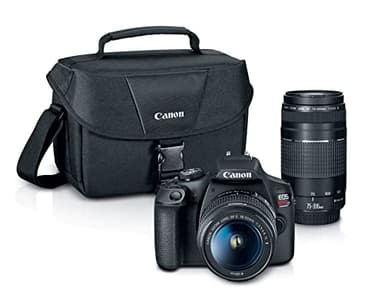
Canon 2727C021 Review
Canon EOS Rebel T7 DSLR Camera, 24.1MP, 2 Lens Kit with EF18-55mm and EF 75-300mm Lenses, Black
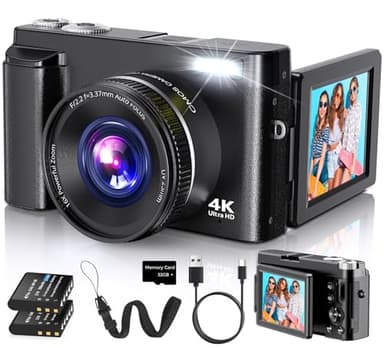
Duluvulu DC101 Review
Duluvulu 4K Digital Camera for Photography Autofocus, 2026 Latest 48MP Vlogging Camera for YouTube with SD Card, 2 Batteries, 3" 180°Flip Screen Compact Travel Camera for Teens with 16X Zoom,Black
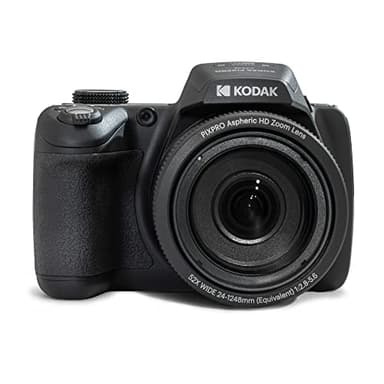
KODAK AZ528BK Review
KODAK PIXPRO AZ528 16MP Digital Camera, 52x Optical Zoom, Wi-Fi, Black | 1080p Full HD Video, 24mm Wide Angle Lens, 3 Inch LCD, Optical Image Stabilization, 6fps Burst, Bridge Camera
Simplified Buying Guide
This is the most fundamental choice. It defines the camera's size, technology, and how you interact with it.
- DSLR (Digital Single-Lens Reflex): The classic "big" camera. You look through an optical viewfinder, seeing exactly what the lens sees through a system of mirrors (that's the "reflex" part). They are known for fantastic battery life and a robust feel. While still excellent, most new innovation has shifted to mirrorless.
- Mirrorless: The modern champion and where most brands are focusing their energy. By removing the mirror, these cameras are generally smaller, lighter, and quieter than DSLRs. You compose your shot using either the back screen or an electronic viewfinder (EVF), which is a tiny screen that shows you a digital preview of your image. This means what you see is exactly what you get.
- Point-and-Shoot: The simplest option. The lens is built-in and cannot be changed. They are incredibly compact and easy to use, offering a significant quality jump over a phone without the complexity of interchangeable lenses.
- Bridge Camera: A hybrid that looks like a DSLR but has a fixed, non-changeable lens. Its superpower is a massive zoom range, often called a "superzoom." It's for those who want the versatility of zooming from wide to telephoto without ever buying or carrying another lens.
- Action Camera: Tiny, tough, and often waterproof. These are designed to be mounted on helmets, bikes, or drones to capture life in motion. Think GoPro.
- Instant Camera: The life of the party! These cameras (like Fujifilm's Instax or Polaroid) print a physical photo moments after you take it. It's all about fun, tangible memories, not technical perfection.
For most beginners looking to grow in photography, a Mirrorless camera is the best place to start. It offers the best balance of modern technology, size, and future potential.
Think of choosing a brand as joining an "ecosystem." The camera body is just the start; the lenses and accessories are a long-term investment.
The Big Three (Canon, Sony, Nikon): These are the titans of the industry. All make phenomenal cameras.
- Canon: Known for user-friendly menus and fantastic color science, especially for skin tones.
- Sony: The pioneer of the full-frame mirrorless market, known for cutting-edge autofocus and video features.
- Nikon: Legendary for its robust build quality and superb ergonomics (how it feels in your hand).
The Specialists:
- Fujifilm: Adored for its beautiful retro designs, unique color simulations (that mimic old film stocks), and fantastic APS-C cameras.
- Panasonic (LUMIX): Often hailed as a video powerhouse, offering incredible video features, often at a great price.
- OM System (formerly Olympus): Specializes in the Micro Four Thirds system, making incredibly compact, weather-sealed cameras and lenses perfect for travel and wildlife.
Don't get too caught up in brand wars. They are all excellent. The one that feels best in your hand is often the right choice. More importantly, look at the lens system for that brand (more on that later).
More megapixels generally mean more detail. This is useful for two main things: making very large prints or "cropping" your photo (zooming in on a part of the image after you've taken it) without losing too much quality.
Is more always better? Not necessarily! For most people, anything in the 24MP to 40MP range is the sweet spot. It provides plenty of detail for social media, websites, and beautiful prints. Ultra-high resolutions (61MP and up) create massive file sizes that require more storage and a powerful computer to edit.
Don't let megapixels be your main deciding factor. A camera with 26MP and a great sensor will produce a better image than a camera with 50MP and a poor sensor. Focus on the overall system.
- Full-Frame: The gold standard for professionals. The sensor is the same size as traditional 35mm film. It offers the best low-light capability and image quality, but it comes with a higher price tag and larger lenses.
- APS-C: The most popular sensor size for hobbyists and enthusiasts. It offers a fantastic balance of excellent image quality, manageable size, and affordability. This is a perfect starting point.
- Micro Four Thirds (MFT): Smaller than APS-C, this system allows for incredibly compact cameras and lenses, making it a favorite for travelers and videographers who need a lightweight kit.
- 1-inch & Compact: Found in high-end point-and-shoots and bridge cameras. A massive leap in quality from a smartphone, but not quite on the level of the interchangeable lens systems above.
- APS-C is the sweet spot for most beginners. It gives you a clear path to pro-level results without the cost and bulk of a full-frame system.
This is the clarity of your video.
- 1080p (Full HD): The old standard. Fine for basic video, but 4K is noticeably better.
- 4K: The current standard. It's crisp, detailed, and what most new TVs and monitors are built for. It also gives you the flexibility to crop in post-production.
- 6K/8K: This is professional territory. It captures an incredible amount of detail but requires massive memory cards and a very powerful computer to edit.
Look for a camera that can shoot in 4K. It's the most practical and future-proof choice.
- Burst Speed (fps): Measured in frames per second, this is how many photos the camera can take in a one-second burst when you hold the shutter button down.
Essential for capturing action. Think sports, wildlife, or your dog catching a ball. A standard speed (under 10fps) is fine for portraits and landscapes. A fast speed (10fps and up) is what you want for action.
- Autofocus (AF): This is how the camera locks onto your subject. Modern AF is magical.
- Eye Detection AF: A game-changer. The camera automatically finds a person's (or animal's) eye and keeps it in perfect focus. This is your secret weapon for amazing portraits.
- Animal/Bird/Vehicle Detection: The same technology, but trained to track specific subjects. Incredibly useful for your specific hobbies.
- In-Body Image Stabilization (IBIS): A mechanism inside the camera body that physically moves the sensor to counteract your shaky hands. It lets you shoot at slower shutter speeds in low light without getting a blurry photo. This is a highly desirable feature.
- Weather-Sealed Body: Gaskets and seals protect the camera from light rain, dust, and humidity. A must-have for landscape, travel, and outdoor photographers.
- Articulating / Flip Screen: A screen that can tilt and flip around is essential for shooting at low or high angles, and absolutely critical for vlogging or taking selfies.
- Dual Card Slots: Allows you to record your photos to two memory cards at once. This is primarily a professional feature for instant backup, providing peace of mind during can't-miss events like weddings.
- Connectivity (Wi-Fi, Bluetooth, USB-C): Wi-Fi/Bluetooth lets you instantly transfer photos to your phone for sharing. USB-C charging means you can charge your camera with the same power bank or cable you use for your phone or laptop—incredibly convenient for travel.
- Microphone Input: A 3.5mm jack that lets you plug in an external microphone. This is non-negotiable if you are serious about video, as it will improve your audio quality by 1000%.
- Body Only: Just the camera, no lens. Choose this if you already own lenses or want to buy a specific, higher-quality lens from the start.
- Kit Lens Included: Comes with a versatile, all-purpose starter lens. This is the best option for most beginners, as it gets you shooting right out of the box.
- Creator / Vlogging Kit: A bundle that often includes a wide-angle lens, a small tripod/grip, and sometimes a microphone. Perfect for aspiring content creators.
- Lens System: This refers to the "mount" – the physical connection between the camera and the lens. A Canon RF lens will not fit a Sony E-mount camera. When you choose a brand, you are committing to its lens system.
- For the Aspiring Vlogger: Prioritize a Flip Screen, Eye AF, IBIS, and a Microphone Input. A creator kit is a great starting point.
- For the Traveler: Look for a compact system like APS-C or Micro Four Thirds. Weather-sealing and USB-C charging are huge bonuses.
- For the Sports & Wildlife Shooter: You need a fast burst speed (`10 fps+) and advanced Animal/Bird Detection AF. Check that the lens system has good telephoto lens options.
- For the All-Around Beginner: An APS-C Mirrorless camera with a Kit Lens is the perfect, can't-go-wrong choice. Look for one with good Eye AF and a Touchscreen to make your transition from a phone seamless.
9 Digital Cameras deals are available from: Amazon, starting from $39.98.
The biggest discount we found is 25% on Duluvulu 4K Digital Camera for Photography Autofocus, 2026 Latest 48MP Vlogging Camera for YouTube with SD Card, 2 Batteries, 3" 180°Flip Screen Compact Travel Camera for Teens with 16X Zoom,Black (DC101) at Amazon.
The lowest price we found is $39.98 while the highest is $619.00. Prices for the best Digital Cameras deals average at $158.72.
Last updated on October 23, 2026.
We scanned these quality online stores and more to deliver you with the best offers online available for Digital Cameras.
Our Ranking Process
We analyzed thousands of deals using our proprietary SmartDeal algorithm.
Discount Depth
Verifying true historical lows vs seasonal noise.
Price History
365-day tracking to establish a fair median baseline.
User Ratings
Aggregated verified reviews for long-term satisfaction.
Value Ratio
Weighing features vs cost for maximum utility.
Popularity
Real-time demand tracking for trending items.