Today's best Espresso Machines products & deals of 2026
- Discount Depth & Duration
- Median Price Tracking
- Customer Feedback & Ratings
- Price-to-Value Ratio
- Market Demand & Popularity






Get Our Best Deals Sent to Your Inbox
We scour deals so you don't have to. Get alerts when top brands hit their lowest historical prices.
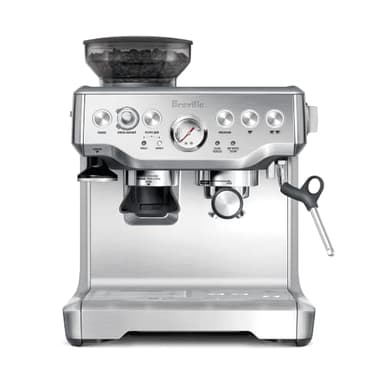
Breville BES870XL Review
Breville BES870XL Barista Express Espresso Machine, Brushed Stainless Steel
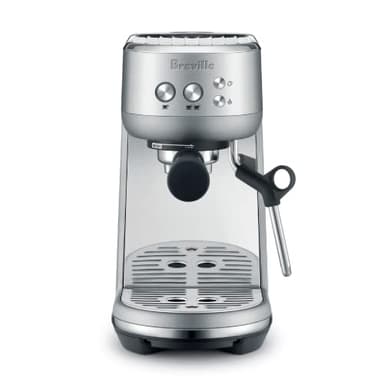
Breville BES450BSS1BUS1 Review
Breville BES450BSS Bambino Espresso Machine, Brushed Stainless Steel
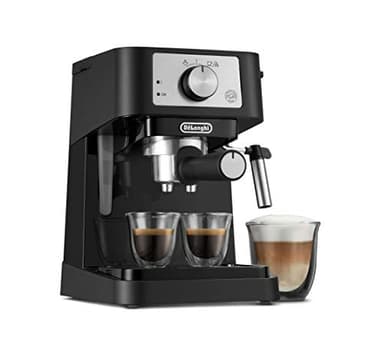
De'Longhi EC260BK Review
De'Longhi Stilosa Compact Manual Espresso Machine, Manual Milk Frother
Simplified Buying Guide
Your choice of machine type sets the stage for your entire espresso experience. It's the difference between being a pilot or a passenger.
- Super-Automatic: These are the "bean-to-cup" machines. You add whole beans and water, and with the press of a button, the machine grinds, tamps, brews, and sometimes even adds frothed milk. They offer ultimate convenience and consistency. Popular brands like Jura and Philips excel here.
- Semi-Automatic: This is the sweet spot for most coffee enthusiasts. You are the barista. You'll grind the beans (or use pre-ground), tamp the coffee into the portafilter, and start and stop the shot yourself. This gives you immense control over the final taste. Breville, Gaggia, and Rancilio are titans in this category.
- Manual (Lever): For the purist. With a manual machine, you physically pull a lever to generate the pressure needed for extraction. It's a challenging but incredibly rewarding process that gives you a direct connection to your coffee. Brands like La Pavoni and Flair are famous for these.
- Capsule / Pod: The peak of convenience and simplicity. You insert a pre-packaged pod (like Nespresso or Keurig), press a button, and get espresso in seconds. The results are consistent, but you trade flavor potential and freshness for speed, and you are locked into a specific pod ecosystem.
If you crave a coffee-making hobby and want the best possible flavor, a semi-automatic is your best bet. If you value speed and convenience above all, a super-automatic or capsule machine will be your best friend.
The form of coffee you use is the foundation of your drink's flavor. Freshness is key, but convenience can be a powerful motivator.
- Whole Bean: Using whole beans, ground just moments before brewing, provides the most fresh and aromatic espresso. This is the standard for super-automatic machines and is the preferred method for any serious semi-automatic user with a separate grinder.
- Ground Coffee: This offers great flexibility. While you can buy pre-ground coffee for convenience, using a separate grinder to grind your whole beans gives you the best of both worlds. All semi-automatic and manual machines use ground coffee.
- Nespresso Capsules: These small, sealed aluminum pods are used in Nespresso machines. They offer a wide variety of blends and are incredibly simple to use, but are more expensive per-cup than beans.
- Keurig K-Cups: While primarily for brewed coffee, some K-Cups are designed for espresso-style drinks in Keurig machines. Convenience is high, but the quality is generally not on par with other methods for true espresso.
- E.S.E. Pods (Easy Serving Espresso): These are small, paper-wrapped pods of pre-tamped coffee. They offer a convenient, no-mess alternative to using loose ground coffee in some semi-automatic machines, though they are less common today.
For the best flavor, nothing beats grinding fresh whole beans. For the ultimate in speed and ease, capsules are undeniable, but be prepared for the recurring cost and environmental impact.
Coffee beans begin to lose their flavor and aroma within minutes of being ground. Deciding how you'll handle this crucial step is a major factor in your machine choice.
- Integrated Grinder: An all-in-one solution that saves counter space and simplifies the workflow. You pour beans in the top, and the machine grinds them directly into the portafilter or brewing unit. This is a hallmark of the Breville Barista series and nearly all super-automatic machines.
- No Grinder: This approach offers more flexibility and higher potential quality. It means you must buy a separate, dedicated espresso grinder. While this adds cost and takes up more space, it allows you to pick a high-performance grinder and upgrade it independently of your machine. This is the standard for enthusiast-level semi-automatic machines.
An integrated grinder is perfect for beginners and those who want a streamlined process. A separate grinder is the path for the enthusiast who wants to fine-tune every variable for the perfect shot.
If you're a fan of lattes, cappuccinos, or flat whites, the milk frothing system is a critical feature. The choice is between automated simplicity and hands-on craft.
- Automatic Frother / Carafe: This system does all the work for you. Simply add milk to a carafe or container, and the machine will automatically steam and froth it to a set texture, often dispensing it directly into your cup. It’s perfect for one-touch milk drinks and consistency.
- Manual Steam Wand: This is the tool of a traditional barista. It's a metal wand that shoots high-pressure steam, allowing you to manually heat and texture the milk in a pitcher. It requires practice to master, but offers complete control to create velvety microfoam perfect for latte art.
- No Frother: For the purists who drink only espresso or Americanos. Some manual machines and very basic models omit a frother entirely to focus solely on the coffee extraction.
Choose an automatic frother if your goal is quick, consistent lattes. Choose a manual steam wand if you're excited by the idea of learning a new skill and perfecting your milk-based drinks.
This is the heart of the machine, responsible for heating water. The boiler setup dictates how quickly the machine heats up and, most importantly, whether it can brew espresso and steam milk at the same time.
- Single Boiler / Thermoblock: These systems use one heating element for both brewing espresso (around 200°F) and producing steam (around 265°F). You cannot do both simultaneously; you have to wait for the machine to change temperatures. This is common in entry-level machines. Thermoblocks are a type of flash heater that get up to temperature very quickly.
- Heat Exchanger (HX): A clever solution for doing both at once. A large boiler is kept at steam temperature, and a coiled tube carrying fresh water for brewing runs through it, flash-heating the brew water on its way to the group head. This is a big step up and a favorite for home enthusiasts.
- Dual Boiler: The top-of-the-line configuration. Two separate boilers—one dedicated to brewing at a precise temperature, and one dedicated to producing powerful steam. This offers the best thermal stability and performance, with no compromises. This is for the serious home barista who wants professional-level capability.
A single boiler is fine if you mostly drink espresso or make milk drinks infrequently. A heat exchanger is the perfect middle ground for latte lovers. A dual boiler is the ultimate choice for performance and precision.
Once you've mastered the basics, these features allow you to elevate your espresso from good to great by giving you more data and control over the brewing process.
- PID Temperature Control: A Proportional-Integral-Derivative controller is essentially a highly accurate digital thermostat. It keeps the brew water at a very precise and stable temperature, which is critical for consistent and delicious espresso. This is a must-have feature for any serious enthusiast.
- Pressure Gauge: This dial shows you the pressure being applied during extraction. It provides real-time feedback, helping you diagnose your shot. Too low? Your grind might be too coarse. Too high? Your grind might be too fine. It’s an invaluable learning tool.
- Programmable Shots: This allows you to set a specific volume or time for your espresso shot. Once programmed, you can press a button and the machine will deliver the same amount of water every time, improving consistency.
- Digital Display: Provides clear information like water temperature, shot timers, and maintenance alerts, making the machine easier to use and control.
- Smart Controls (App): A modern feature on high-end machines that allows you to control settings, schedule on/off times, and access tutorials or recipes from your smartphone.
- Cup Warmer: Usually a heated metal area on top of the machine. Pre-warming your cups prevents the cold ceramic from shocking your hot espresso, which can immediately sour the flavor.
- Hot Water Dispenser: A spout that dispenses hot water, perfect for making Americanos, tea, or simply pre-heating your cup quickly.
For a beginner moving to the next level, a PID and a pressure gauge are the two most impactful features for improving your coffee. Programmable shots and a cup warmer are excellent quality-of-life additions.
Thinking about how and where you'll use your machine is the best way to narrow down your options from hundreds to just a handful.
- Beginner Friendly: These machines prioritize ease of use over granular control. They often have simpler interfaces, helpful guides, and features like integrated grinders or automatic frothers to make the learning curve less steep. The Breville Bambino or Barista Express are great examples.
- Coffee Enthusiast: This category is for the hobbyist who wants control. These machines often feature manual steam wands, pressure gauges, PID temperature control, and are built to be paired with a high-quality separate grinder. Brands like Rancilio, Lelit, and Rocket cater to this crowd.
- Office: The key requirements here are speed, durability, and simplicity for multiple users. Super-automatic and high-capacity capsule machines are perfect, as anyone can walk up and get a decent coffee with a single button press. A large water tank and bean hopper are essential.
- Compact / Small Kitchen: If counter space is a luxury, you need a machine with a small footprint. Many brands now offer slim, powerful machines that don't sacrifice quality for size. Think about the Nespresso Essenza Mini or the Breville Bambino.
Be honest about your lifestyle. If you don't have time for a new hobby, an "enthusiast" machine will just gather dust. If you crave control, a "beginner" machine might leave you wanting more.
The diameter of your group head determines the size of the coffee basket and, most importantly, what accessories (like tampers, funnels, and distribution tools) you can buy for it.
- 58mm Head: This is the gold standard, used on the vast majority of commercial and prosumer-level machines (like those from Rocket, Profitec, and Gaggia). It offers the largest ecosystem of high-quality, third-party accessories, giving you endless options for upgrading and experimenting.
- 54mm Head: This size is most famously used by Breville for many of their popular home machines. While not the commercial standard, the popularity of Breville means there is still a very good selection of accessories available for this size.
- 51mm Head: This size is typically found on more entry-level, budget-friendly machines, such as some from De'Longhi. The accessory market is smaller and generally not as high-quality as the 58mm or 54mm markets.
- Proprietary Head: This isn't a measurement but a system specific to a brand. All capsule machines (Nespresso, Keurig) use a proprietary head designed only for their specific pods. You cannot use a portafilter or loose coffee grounds with them.
If you're a casual user, this spec doesn't matter much. If you're an aspiring enthusiast who loves to tinker and upgrade, aiming for a 58mm machine will give you the most freedom and options down the road.
Consider how many drinks you (or your household) make per day. A bigger tank is always more convenient, but often comes with a larger machine footprint.
- Small (Under 40 oz): Ideal for single users or kitchens with very limited space. Expect to refill it daily, or even after just a couple of milk-based drinks (which use extra water for steam and purging).
- Medium (40 oz - 60 oz): A great middle ground for most couples or small families. You'll likely only need to refill it every other day with average use.
- Large (60 oz - 80 oz): Perfect for heavy coffee drinkers, entertaining guests, or a small office. This size significantly reduces the frequency of refills, making it much more convenient.
- Extra Large (Over 80 oz): This is the territory of high-capacity super-automatic machines designed for office or commercial use. Some high-end home machines can also be "plumbed in," connecting directly to your water line to eliminate refills entirely.
Don't underestimate the convenience of a larger tank. If you have the space for it, it's a quality-of-life feature you'll appreciate every single day.
The choice of material is a balance between cost, weight, and long-term durability. Generally, more metal means a more robust and stable machine.
- Stainless Steel: The preferred material for high-end machines. It's incredibly durable, resistant to rust, easy to clean, and provides a classic, professional aesthetic. Its weight also adds stability, preventing the machine from sliding around on the counter when you're locking in the portafilter.
- Plastic: Commonly used in the housing of entry-level and capsule machines to keep costs down. While modern plastics can be quite sturdy, they don't have the premium feel or longevity of steel. They can also be more susceptible to scratching or staining over time.
- Aluminum: A good middle-ground material. It's lighter than steel but more durable than plastic. It's often used for components like boilers or thermoblocks because of its excellent heat-conducting properties.
A stainless steel body is a good indicator of a machine built to last. However, a well-designed machine with a plastic housing can still be a great, affordable choice for beginners.
While performance is king, there's no reason your machine can't also match your kitchen's style. After you've narrowed down your choices by function, you can often find your ideal model in a color you love.
- Stainless Steel / Silver: The timeless, classic look. It matches most modern kitchen appliances and gives off a professional, cafe-like vibe.
- Black: A sleek, modern choice that can be either matte or glossy. It's great for creating contrast or matching other black appliances.
- White: A clean, minimalist option that has become very popular. It can help make a kitchen feel brighter and more open.
- Red: A bold, retro statement color. Brands like Smeg and KitchenAid are famous for offering their appliances in vibrant, eye-catching colors like red.
- Cream: A softer, vintage-inspired alternative to white. It provides a warm and inviting look on the countertop.
This choice is purely personal. Once you know the type of machine and features you need, have fun picking a finish that complements your personal style and kitchen decor.
10 Espresso Machines deals are available from: Amazon, starting from $79.99.
The biggest discount we found is 38% on atatix Espresso Machine with Milk Frother, 20 Bar Pressure Espresso Maker (EM3111) at Amazon.
The lowest price we found is $79.99 while the highest is $699.95. Prices for the best Espresso Machines deals average at $302.98.
Last updated on August 24, 2026.
We scanned these quality online stores and more to deliver you with the best offers online available for Espresso Machines.
Get Our Best Deals Sent to Your Inbox
We scour deals so you don't have to. Get alerts when top brands hit their lowest historical prices.
Our Ranking Process
We analyzed thousands of deals using our proprietary SmartDeal algorithm.
Discount Depth
Verifying true historical lows vs seasonal noise.
Price History
365-day tracking to establish a fair median baseline.
User Ratings
Aggregated verified reviews for long-term satisfaction.
Value Ratio
Weighing features vs cost for maximum utility.
Popularity
Real-time demand tracking for trending items.