Pilates Barrel Buying Guide
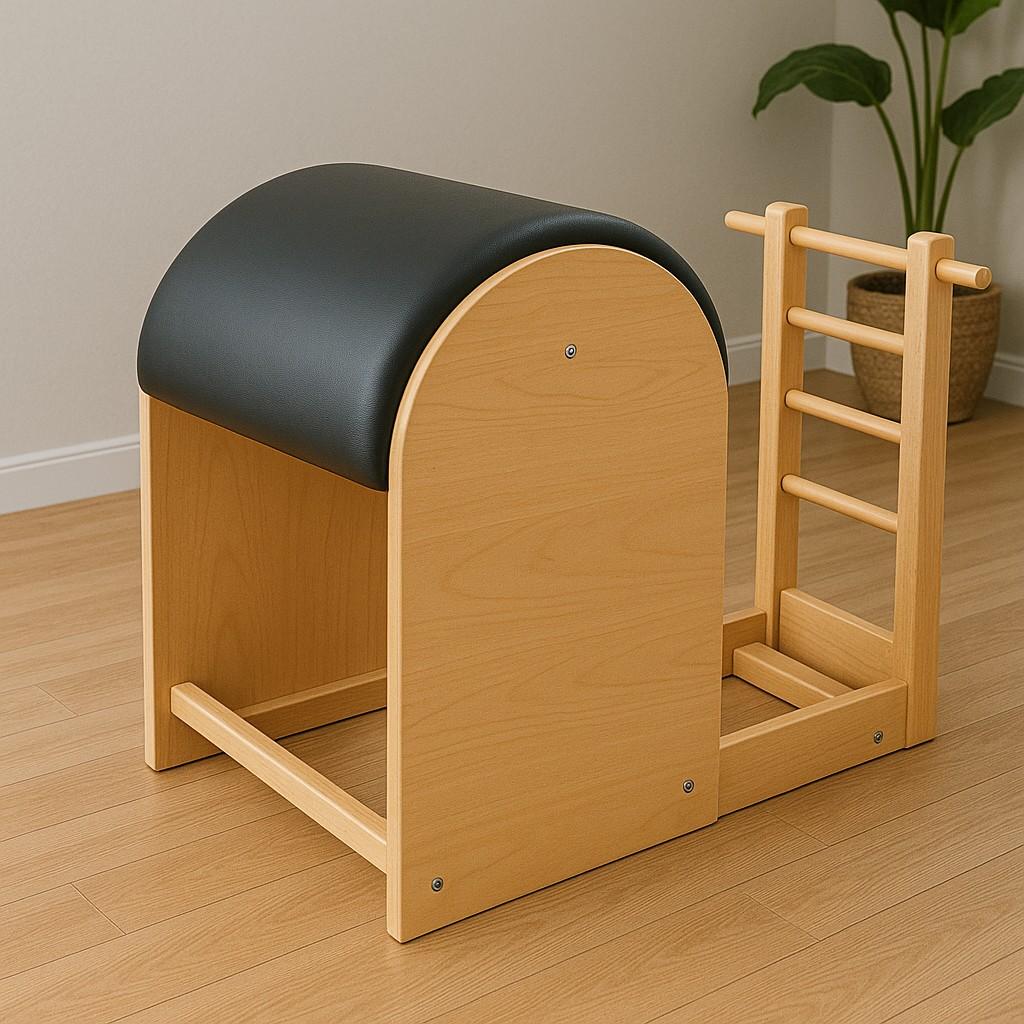
Barrel Types
Pilates barrels are fantastic tools designed to support your spine, open your chest, and challenge your core. But the word "barrel" covers a few different designs, each with a specific purpose. Your first decision is figuring out which shape best fits your space and your practice.
- Ladder Barrel: This is the largest piece of equipment in the barrel family. It combines a barrel surface with a set of ladder rungs. It's a studio-grade piece designed for deep backbends, advanced stretches, and challenging core work. It takes up significant space and is a serious investment.
- Spine Corrector: This is the mid-sized option. It features a more pronounced arc than the Arc Barrel and often includes a "step" and wooden grab bars. It's exceptionally versatile for exercises that articulate the spine, open the shoulders, and strengthen the core.
- Arc Barrel: This is the most common and smallest option, often called a "Pilates Arc." It's typically a lightweight, one-piece foam or wood barrel with a gentle curve. It's perfect for modifying mat exercises, adding a challenge to your core work, or providing gentle support for stretches.
- Step Barrel: This term is often used interchangeably with the Spine Corrector, as it features a barrel connected to a small step or standing platform.
For most home users, the choice is between a lightweight Arc Barrel for mat modifications or a more substantial Spine Corrector for a dedicated practice. The Ladder Barrel is generally reserved for dedicated Pilates studios.
Home vs Studio
Think about where and how often this barrel will be used. A piece of equipment built for a busy studio has very different construction than one designed to be tucked away in a living room.
- Home Use: These barrels are typically lighter, more compact, and may prioritize portability or storage. Foam Arc Barrels are a perfect example of a "Home Use" design.
- Studio Use: This equipment is built like a tank. It's designed to withstand all-day use by clients of varying sizes. This means heavier, more robust frames (like solid wood and steel), premium upholstery, and higher weight capacities.
- Gym Use: Identical to Studio Use, this emphasizes extreme durability, stability, and low-maintenance materials that can be easily cleaned.
Don't overpay for a "Studio Use" label if you're the only one using it. However, if you're a larger individual or plan on very rigorous, daily use, a studio-quality build may be a worthwhile investment in the long run.
Frame/Material
The material is the heart of the barrel. It dictates its durability, stability, weight, and overall feel. This is especially important for Spine Correctors and Ladder Barrels.
- Wood: This is the classic, traditional material for high-quality Pilates equipment. It's heavy, stable, and looks beautiful.
- Beech Wood: A premium, strong, and durable hardwood. This is a common choice for top-tier studio brands.
- Solid Wood: This general term implies quality and durability over cheaper particleboard or plywood.
- Rubber Wood: A sustainable and very durable hardwood, often used as a high-quality, cost-effective alternative to beech or maple.
- Steel: You may find steel used in the ladder rungs or as a part of the frame on some modern designs for added strength and rigidity.
- Foam: This is the primary material for most Arc Barrels. High-density foam makes the barrel extremely lightweight and portable, though it has a lower weight capacity.
For Ladder Barrels and Spine Correctors, a solid wood frame is the gold standard for stability. For Arc Barrels, foam is the standard, making it light enough to move around easily.
Upholstery/Comfort
This is the part of the barrel your body actually touches. You're looking for a balance: it needs to be comfortable enough for spinal exercises but firm enough for support, and it must be easy to clean.
- Vinyl: This is the industry standard for 99% of upholstered barrels. It's not the same as old, cheap vinyl. Modern Pilates equipment uses sweat-resistant, non-slip, and durable vinyl (often called "marine-grade") that is very easy to wipe down.
- Leather: Extremely rare, very expensive, and high-maintenance. You will likely not encounter this outside of ultra-luxury custom brands.
- None (Foam): This applies to Arc Barrels made entirely of foam. The foam itself is the surface.
- High Density Foam: This is the padding *under* the vinyl. You want it to be firm. If the padding is too soft, you'll "bottom out" and feel the wood frame underneath, which defeats the purpose.
- EVA Foam / EPP Foam: These are specific types of high-density foam used to construct lightweight Arc Barrels. They are resilient, durable, and provide a firm, supportive surface.
Your best bet is a barrel with a High Density Foam padding and a durable Vinyl cover. For lightweight Arc Barrels, a one-piece EVA or EPP Foam construction is perfect.
Weight Capacity
This is a critical safety specification, not a suggestion. Always check the manufacturer's listed weight limit and make sure it comfortably exceeds your own body weight.
- Up to 220 lbs: This is a common limit for many lightweight, all-foam Arc Barrels.
- 221 lbs to 300 lbs: This is a standard and safe range for most home-use wood Spine Correctors and higher-quality foam arcs.
- 301 lbs to 450 lbs (or more): This higher capacity indicates a robust, studio-grade build, typical of heavy wood Spine Correctors and all Ladder Barrels.
When in doubt, aim for a higher capacity. This indicates a stronger, more durable frame that will feel more stable and secure during all exercises, especially dynamic ones.
Features
Beyond the basic shape, these are the bells and whistles that can make a barrel more versatile and user-friendly.
- Adjustable Base: This is the key feature of a Ladder Barrel. It allows you to change the distance between the ladder and the barrel to fit different body sizes and exercises.
- Portable / Carrying Handles: A must-have for Arc Barrels and foam Spine Correctors. It simply makes them easy to pick up, move, and store.
- Grab Bar: These are the wooden handles found on most Spine Correctors. They are essential for providing support during many stretches and exercises.
- Standing Platform: The "step" part of a Spine Corrector or Step Barrel. It provides a flat, stable surface for the feet in exercises like "Short Box" or for standing stretches.
- Detachable Wedge: Some Spine Correctors are sold with a removable wedge piece. This increases versatility, allowing you to use the main barrel as a simpler arc.
- Reformer Compatible: Some Arc Barrels (like those from STOTT PILATES) are designed with a shape that allows them to be used on a Pilates Reformer carriage for modified exercises.
For home use, Carrying Handles on an Arc Barrel is a huge convenience. For a Spine Corrector, Grab Bars and a Standing Platform are standard features you should expect.
Included Content
What else comes in the box? Especially if you're new to the barrel, having workout materials included is a massive bonus that helps you get started safely.
- Online Workout Videos / Digital Access: This is the best value-add. Many brands, like AeroPilates, offer free access to online workouts or a streaming app with your purchase. This saves you from having to subscribe to a separate service.
- Workout Guide / Manual: This is often a printed poster or booklet. It's great for quick reference, showing you foundational exercises and proper form.
A barrel is only useful if you know how to use it. Look for brands that include a digital workout package to get the most value and use out of your new equipment from day one.
Brands
On Amazon, you'll see a mix of generic brands and established Pilates names. Knowing the key players can help you gauge the quality you're likely to receive.
- Balanced Body: A top-tier, professional studio brand. Their equipment is premium, exceptionally well-made, and carries a high price tag. This is a "buy it for life" investment.
- STOTT PILATES / Merrithew: Another premium studio brand known for its focus on biomechanics. Their Arc Barrel is a classic and is designed to integrate with their reformers.
- AeroPilates: This is one of the most popular and respected home-use brands. They offer a fantastic balance of quality and price, and almost always include excellent digital workout content.
- Yes4All: A very common brand on Amazon for budget-friendly foam Arc Barrels. They are a solid, no-frills choice if you just want a simple arc for mat work.
For a home practice, AeroPilates often hits the sweet spot of quality and value. For a simple Arc Barrel, Yes4All is a popular budget pick. If you want true studio quality, look for Balanced Body or STOTT PILATES.
Color & Aesthetics
This is the fun part and it's 100% up to you. While it doesn't affect performance, this equipment will be in your home, so you should like the way it looks.
- Black: The most common color for both vinyl upholstery and foam. It's professional, sleek, and does a great job of hiding dirt and scuff marks.
- Gray: A popular modern alternative to black, offering a softer look.
- Natural Wood: This isn't a color so much as a finish. A wood frame (paired with black or gray vinyl) gives a classic, warm, and high-end studio feel.
This is purely personal preference. You can't go wrong with classic black, as it's the easiest to maintain and looks new the longest.