Pizza Oven Buying Guide
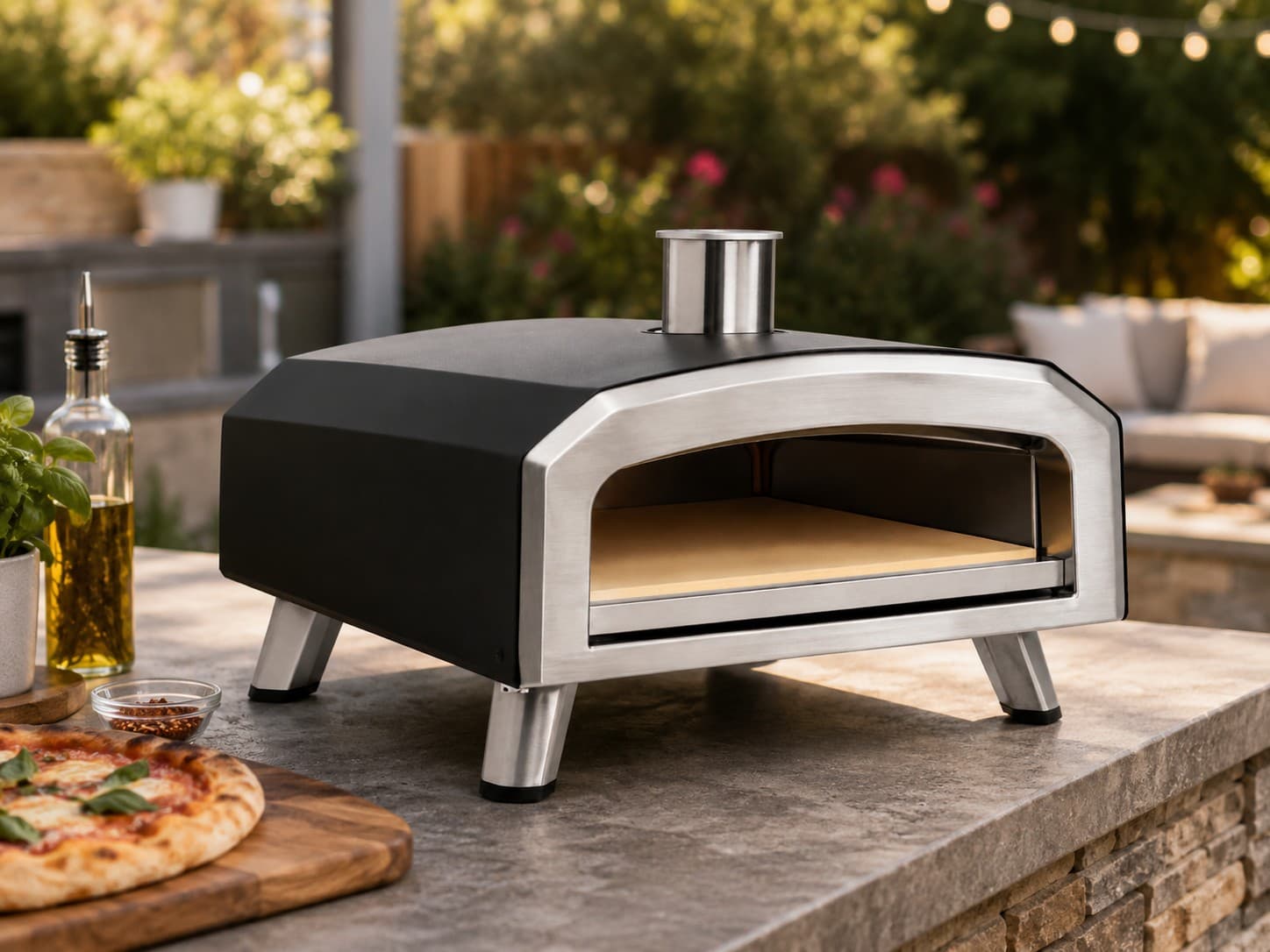
Fuel Type
Fuel type is the first fork in the road, because it shapes everything else: how hot your oven gets, where you can use it, and how much babysitting the fire needs. There's no single "best" here, only what fits your patience and your patio.
- Wood Fired delivers that smoky, leopard-spotted char purists chase. It rewards attention and punishes distraction, so expect a learning curve and a lot of feeding the flame.
- Gas and Propane are the crowd-pleasers: turn a knob, get consistent heat, skip the ash cleanup. Propane models run off standard tanks and are the go-to for weeknight convenience.
- Electric ovens plug into a wall and often work indoors, making them the friendliest choice for apartments and anyone allergic to open flame.
- Pellet splits the difference, offering wood-like flavor with easier, more controlled feeding through a hopper.
- Charcoal brings deep flavor and steady heat, though it's slower to fire up and messier to tend.
- Multi-Fuel ovens accept two or more sources (often gas plus wood), letting you chase flavor one night and convenience the next.
If you want ceremony and flavor, go wood or pellet. If you want a great pizza before your kids lose patience, gas or electric will treat you well. Multi-fuel is the hedge for people who can't decide.
Max Temp
Real pizza lives and dies by heat. A proper Neapolitan pie cooks in about 60 to 90 seconds, and you simply can't hit that in a kitchen oven that tops out around 550°F. The temperature ceiling tells you which pizzas an oven can actually pull off.
- Under 600°F handles pan pizzas, frozen pies, and reheats, but won't give you a blistered, airy crust.
- 600°F to 799°F is a comfortable range for New York-style and thin-crust pizzas that cook in a few minutes.
- 800°F to 899°F starts entering true pizzeria territory, with fast cooks and good char.
- 900°F to 999°F is the sweet spot for authentic Neapolitan pies with leopard-spotting.
- 1000°F & Higher is for the obsessed, delivering restaurant-grade results in under a minute.
Match the ceiling to your ambition. Casual cooks are happy in the 700 to 850°F band, while anyone hunting authentic Neapolitan should insist on 900°F or more.
Cooking Surface
The surface is the unsung hero of a good crust. It's what pulls moisture out of the dough and delivers that satisfying bottom crunch, so the material matters as much as the heat above it.
- Cordierite Stone is the gold standard: it withstands extreme heat, resists thermal shock (cracking from rapid temperature swings), and gives an even, crisp bake.
- Ceramic Stone also crisps nicely and holds heat well, though it can be more prone to cracking under sudden temperature changes.
- Steel Deck conducts heat aggressively for a fast, deeply browned bottom, and it's tougher to chip than stone.
- Nonstick Plate shows up on electric and countertop models, prioritizing easy release and cleanup over blistering-hot performance.
For flavor and forgiveness, cordierite is hard to beat. Steel is the pick for speed demons, while nonstick suits the convenience crowd who value an easy wipe-down.
Material
The oven's body determines how well it holds heat, how long it survives the elements, and how much it weighs when you haul it out for a party. This is where durability quietly earns its keep.
- Stainless Steel is the most common choice for good reason: it resists rust, cleans up easily, and looks sharp for years, especially outdoors.
- Carbon Steel heats fast and runs lighter, but needs a little more care to keep corrosion at bay.
- Cast Iron is a heat-retention champion that stays hot and even, at the cost of serious weight.
- Ceramic insulates beautifully and holds temperature like a vault, though it's heavier and more fragile if knocked around.
Stainless steel is the safe, low-maintenance default for most buyers. Reach for cast iron or ceramic if steady, retained heat is your priority and you don't plan to move the oven often.
Size
Size refers to the largest pizza the oven can cook, and it's easy to underestimate. A cramped cooking area makes launching and turning pies a stressful affair, while too large an oven eats up space and fuel you may not need.
- Under 12 in suits personal pizzas and tight countertops, ideal for solo cooks or small kitchens.
- 12 in is the sweet spot for most home users, balancing standard pizza size with a manageable footprint.
- 13 in to 14 in gives you a little breathing room to maneuver the peel and feed a small group.
- 15 in to 16 in is built for families and entertainers who want fewer batches.
- 17 in & Larger is party-scale, letting you crank out big pies or multiples for a crowd.
Twelve to fourteen inches covers the vast majority of households comfortably. Go bigger only if you regularly cook for a group and have the counter or yard space to spare.
Placement
Where the oven can safely live is a practical make-or-break, especially in cities and apartments. Flame-based ovens generally need open air, while others are happy on a kitchen counter, so confirm this before you fall in love with a model.
- Indoor models are typically electric and safe for enclosed spaces with proper ventilation.
- Outdoor ovens cover the wood, gas, and charcoal crowd that produce real smoke and flame.
- Countertop designs are compact enough to sit on a standard kitchen surface.
- Tabletop units are portable and sized for patio tables or picnic setups.
- Built-In ovens are made to be permanently installed into an outdoor kitchen or masonry surround.
Renters and apartment dwellers should lean toward indoor or countertop electric options. Homeowners with yard space get the full menu, and a built-in is worth considering if you're designing a permanent outdoor kitchen.
PIzza Style
Not every oven is built for every pie. The style you crave should steer your purchase, because a machine tuned for fast, blistering Neapolitan is a different beast than one designed for a thick, cheesy pan pizza.
- Neapolitan demands extreme heat and a fast cook for that soft, charred, airy crust; look for high-temperature ovens.
- New York style favors slightly lower temperatures and a longer bake for a foldable, crisp-yet-chewy slice.
- Thin Crust cooks quickly and cleanly across most oven types, making it a flexible everyday option.
- Pan pizza needs steady, moderate heat to cook through a thick base without burning the top.
- Frozen pies are the low-stakes convenience play, well within reach of even modest ovens.
Chase Neapolitan and you're shopping for raw heat; favor pan or frozen and you can relax on temperature and prioritize even, controllable cooking instead.
Cooking Functions
Some ovens are one-trick ponies, and some want to be your whole kitchen. Extra functions add real versatility, but only pay for the ones you'll genuinely use, since bonus modes often bump up the price.
- Bake is the baseline, handling everything from pizza to bread and cookies.
- Broil blasts top heat for finishing, melting, and browning.
- Roast turns the oven into a mini roaster for meats and vegetables.
- Air Fry uses circulated hot air for crispy results with little oil, a popular modern add-on.
- Proof holds a gentle warmth to help dough rise, a nice touch for from-scratch bakers.
- Warm keeps finished food at serving temperature without overcooking.
- Dehydrate slowly dries fruits, jerky, and herbs at low heat.
- Smoker adds smoky flavor to meats and other dishes for the barbecue-minded.
A dedicated pizza oven rarely needs more than bake and broil. Multi-function models earn their price only if you'll actually air fry, proof, and roast, otherwise you're paying for buttons you'll ignore.
Features
Features are the quality-of-life upgrades that separate a frustrating oven from a joyful one. None of them cook the pizza for you, but the right ones make the whole experience smoother and safer.
- Portable designs are light enough to carry to a campsite, tailgate, or friend's backyard.
- Foldable Legs collapse for easier storage and transport.
- Built-In Thermometer takes the guesswork out of heat, which matters enormously when timing is measured in seconds.
- Viewing Window lets you watch the crust without opening the door and dumping heat.
- Rotating Tray spins the pizza automatically for even cooking, a huge help since flame ovens heat unevenly.
- Auto Shut-Off cuts power for safety and peace of mind on electric models.
- Weather Resistant construction shrugs off the elements for ovens that live outside.
- Dual Zone Heat controls different areas independently for more precise cooking.
A built-in thermometer and, ideally, a rotating tray are the two features that most improve real-world results. The rest are welcome conveniences you can prioritize based on how and where you cook.
Wattage
Wattage applies to electric ovens and is a rough proxy for how quickly and intensely they heat. More watts generally means faster preheating and higher top temperatures, though it also means more demand on your outlet.
- Under 1200W covers small, basic countertop units suited to frozen and reheated pizzas.
- 1200W to 1499W is a moderate range for everyday home baking at reasonable temperatures.
- 1500W to 1799W heats faster and hotter, edging toward crispier, quicker cooks.
- 1800W & Higher is the powerhouse tier for electric ovens chasing near-pizzeria heat.
If you're going electric and want serious crust, aim for 1500W or more. Lower wattages are fine for casual use but will test your patience during preheat.
Accessories
Accessories are easy to overlook until you're standing there with a raw pizza and nothing to launch it with. Bundled extras save you a separate shopping trip and can add real value, so check what's actually in the box.
- Pizza Stone is the surface your crust cooks on; some ovens include it, others sell it separately.
- Pizza Peel is the paddle you use to launch and retrieve pies, and it's close to essential.
- Pizza Cutter handles the satisfying final step of slicing.
- Cover protects the oven from dust and weather between uses.
- Carry Bag makes portable ovens genuinely travel-friendly.
- Recipe Book is a nice starter guide for dialing in dough and technique.
A peel is the accessory you truly can't skip, so make sure one's included or budget for it. The rest are welcome bonuses, and a bundled cover or carry bag adds convenience you'd otherwise pay for later.
Color
Color is the least functional attribute here, but it still matters for a piece of gear that may sit proudly on your patio or counter. The main thing is picking a finish you'll enjoy looking at that also fits your space.
- Black is sleek and hides soot and smudges well, a practical favorite.
- Silver is the classic stainless look, clean and modern.
- Gray offers a muted, neutral finish that blends into most settings.
- Red makes a bold, retro statement for those who want the oven to pop.
- Blue is a stylish, less common accent color.
- White looks crisp but shows dirt and heat marks more readily.
- Terracotta leans into rustic, traditional Italian charm.
Function should always outrank color, but when two ovens are otherwise equal, black and stainless are the low-maintenance crowd-pleasers, while bolder shades are there for anyone who wants their oven to be a centerpiece.
Brands
Brand reputation is a shortcut to knowing what you're getting on build quality, support, and resale value. In the pizza oven world, a handful of names dominate for good reason, though the right one depends on your fuel and budget.
- Ooni is arguably the category leader, known for approachable, well-engineered ovens across wood, gas, and multi-fuel setups.
- Gozney is the premium favorite, prized for heavy-duty build quality and serious heat retention.
- Solo Stove brings its clean-burning, low-smoke engineering reputation to sleek portable ovens.
- Ninja and Breville lead the electric and countertop space with versatile, multi-function machines that work indoors.
- Bertello is a strong value pick, often praised for delivering multi-fuel performance at a friendlier price.
- Cuisinart and Everdure round things out with reliable, widely available options spanning gas and electric.
For flame-cooked outdoor pizza, Ooni is the safe, do-everything starting point, with Gozney for those willing to pay for premium and Bertello for the budget-conscious. If you need indoor or countertop convenience, Ninja and Breville are the names to beat.