Shaver Buying Guide
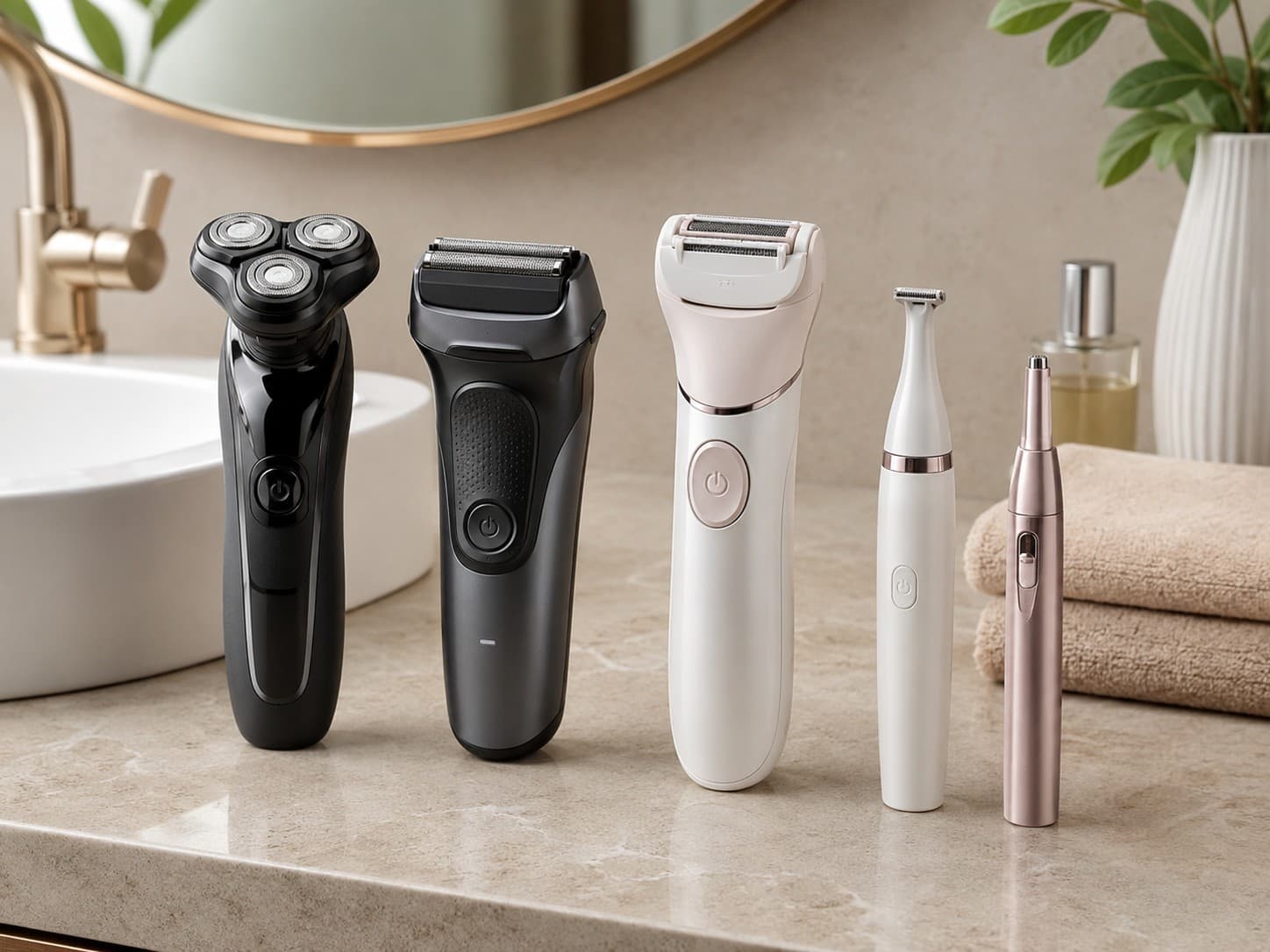
Type
The type of shaver is the single most important decision you'll make, because it dictates how close the shave is, how it feels on your skin, and what maintenance you're signing up for. Everything else is a detail compared to this. Get the type right and the rest falls into place.
- Foil — Uses oscillating blades hidden behind a thin, perforated metal screen. It excels at straight lines and a close, clean finish, making it a favorite for facial hair and detail work. Best for people who shave frequently and want precision.
- Rotary — Three spinning circular heads that flex and pivot to follow the contours of your face and neck. It handles longer, thicker, or irregular hair well and tends to be quieter. Ideal for those who shave every few days rather than daily.
- Cartridge — The classic manual razor with a replaceable multi-blade head. It offers the closest shave of the bunch but demands more time, water, and technique. Ongoing cost lives in the replacement cartridges, so factor that in.
- Disposable — An all-in-one manual razor you toss after a few uses. Cheap and travel-friendly, but not built for the long haul or for sensitive skin over time.
- Epilator — Mechanically grabs and removes hair from the root rather than cutting it, so results last far longer. There's a learning curve and some discomfort, but it's the go-to for extended smoothness on the body and legs.
- IPL — Uses pulses of light to reduce hair growth over repeated sessions, aiming at long-term hair reduction rather than a daily shave. It's an investment and requires consistency and patience to see results.
Match the type to your habits, not the hype. Daily shavers lean electric foil or rotary, closeness-obsessed folks stick with cartridge, and anyone chasing long-lasting smoothness should look at epilators or IPL. Decide this first and shop everything else around it.
Brands
Brand isn't just a logo — it's a signal of blade quality, replacement-part availability, and how long the thing will actually last. On Amazon, a handful of names dominate this category for good reason, and knowing their strengths helps you skip the guesswork.
- Philips Norelco — The heavyweight in rotary shavers, known for comfortable, contour-following heads and strong cordless battery performance. A safe pick for the every-few-days shaver.
- Braun — The benchmark for foil shavers, praised for close shaves, durable build, and reliable self-cleaning stations on higher models. Great for daily, precise grooming.
- Panasonic — Foil shavers with fast-oscillating blades and sharp, thin foils that punch above their price. A strong value play for close, quick shaves.
- Gillette — The dominant force in cartridge and manual razors, with wide availability of replacement blades. The default for people who want the closest possible manual shave.
- Manscaped — Specializes in body and groin grooming tools with guards designed to reduce nicks. Popular for below-the-neck maintenance.
- Remington — A budget-friendly all-rounder offering both foil and rotary options plus grooming kits. Good for shoppers who want features without a premium price.
Pick a brand based on the shaver type you settled on rather than reputation alone — Braun and Panasonic own foil, Philips Norelco owns rotary, and Gillette owns manual. Also check that replacement blades or foils for your specific model are easy to find, because a cheap shaver with pricey or scarce parts is no bargain.
Shaving Area
Not every shaver is built for every body part. The area you're targeting determines the head shape, guard design, and safety features you need, and using the wrong tool in the wrong place is how nicks and irritation happen. Buy for the zone you actually groom.
- Face — The most common target, best served by foil and rotary shavers or cartridge razors designed for facial contours and daily use.
- Head — Requires shavers with multiple flexible heads that glide over a curved scalp, often marketed specifically for a bald look.
- Body — Calls for larger heads and rounded guards that cover more surface area quickly while protecting skin.
- Legs — A big, smooth surface where cartridge razors and epilators shine, especially for long-lasting results.
- Bikini — Sensitive, contoured terrain that needs trimmers or shavers with precision guards and gentle blades.
- Underarm — A small, awkward-angle zone where a pivoting head or flexible trimmer makes the job easier.
- Back — Hard to reach, so look for tools with long or extendable handles built specifically for the task.
- Groin — The most delicate area, demanding rounded, skin-safe guards designed to minimize the risk of cuts.
- Nose & Ear — Requires a dedicated small trimmer attachment with a protective tip, never a standard blade.
A do-it-all grooming kit can be tempting, but a tool purpose-built for a specific area almost always performs better and safer there. Confirm the shaver explicitly lists your target zone before buying, particularly for sensitive regions where the wrong design causes real problems.
Power Source
How your shaver gets its power affects where and how you can use it, and it's an easy spec to overlook until you're stuck. Think about your bathroom setup, your travel habits, and whether you mind being tethered to an outlet.
- Cordless — Runs entirely on a rechargeable battery for total freedom of movement, ideal for travel and mess-free shaving anywhere. The only catch is remembering to charge it.
- Corded — Plugs directly into the wall for unlimited runtime and consistent power, but you're anchored to an outlet and it's less travel-friendly.
- Cord/Cordless — The best of both worlds: use it wirelessly day to day, then plug in when the battery dies. This flexibility is worth prioritizing if you can.
- Battery-Operated — Runs on replaceable batteries rather than a built-in rechargeable pack, handy for backups but adds ongoing battery costs.
- Manual — No power at all, just you and the blade. Simple, reliable, travel-proof, and never out of charge.
Cord/cordless models offer the most versatility and rarely leave you stranded, making them the smart default for most people. If you travel often, prioritize cordless or manual; if you shave at a fixed spot and hate charging, corded still has its place.
Battery Life
For any cordless shaver, battery life decides how often you're chained to a charger and whether it'll survive a trip without one. Runtime is measured in minutes of active shaving, and more isn't always necessary — it depends on how long and how often you shave.
- Under 45 Min — Entry-level runtime, fine for quick daily face shaves but tight if you groom multiple areas or forget to charge.
- 45 to 60 Min — A solid middle ground that covers most people for a week or more of short sessions before a recharge.
- 60 to 90 Min — Comfortable headroom for longer grooming routines and less frequent charging, a sweet spot for many shoppers.
- 90 to 120 Min — Generous runtime suited to full-body grooming or households where the shaver gets heavy use.
- Over 120 Min — Extended endurance for travelers and infrequent chargers who want to plug in as rarely as possible.
Don't overpay for runtime you'll never use — a daily face-shaver rarely needs more than an hour, while body-groomers and frequent travelers benefit from the higher tiers. Pair this spec with the charging type below, since fast recharging can matter more than raw capacity.
Charging Type
The way a shaver charges seems minor until you're hunting for the right cable in a hotel room. Modern standards make life easier, so this small spec is worth a quick check before you commit.
- USB-C — The current universal standard, reversible and shared with most modern phones and laptops, so you can travel with one cable for everything. Often supports faster charging too.
- USB-A — The older, still-common rectangular connector. It works fine and plugs into most chargers and power banks, but it's gradually being phased out in favor of USB-C.
Whenever you have the choice, favor USB-C for future-proofing and cable convenience — it's the standard your other devices are already moving toward. USB-A is perfectly serviceable, just slightly behind the times.
Waterproof Rating
Waterproofing is expressed as an IPX rating, where a higher number means more water resistance. It matters for two reasons: whether you can shave in the shower, and whether you can rinse the shaver clean under the tap. The numbers are precise, so it pays to know what they mean.
- IPX5 — Protected against low-pressure water jets from any direction. Fine for rinsing under a running faucet, but not built for submersion.
- IPX6 — Withstands stronger, high-pressure jets of water, offering a step up in rinsing durability while still not rated for soaking.
- IPX7 — Can be submerged in water up to one meter for about 30 minutes, meaning true shower use and worry-free cleaning.
- IPX8 — The highest common tier, rated for continuous submersion beyond one meter, giving maximum peace of mind for wet use.
If you want to shave in the shower or clean the head under the tap, insist on IPX7 or higher — anything lower is really only meant for a light rinse. Never submerge a shaver rated below IPX7, and always check this number if wet use is part of your plan.
Blade Count
Blade count mainly applies to manual cartridge and disposable razors, and it's often misunderstood. More blades can mean a closer, faster shave, but they can also mean more skin contact and more irritation. The right number is a balance, not a maximum.
- 2-Blade — The simplest setup, gentle on skin and less prone to clogging, though it requires more passes for a close result. A good match for coarse hair or sensitive skin.
- 3-Blade — A balanced, popular choice offering a noticeably closer shave than two blades without much added irritation.
- 4-Blade — Delivers a closer shave in fewer strokes, useful for dense hair, at a slightly higher risk of irritation for sensitive types.
- 5-Blade — The closest and fastest manual option, spreading pressure to reduce tug, but the extra blades can aggravate reactive skin and cost more to replace.
More blades aren't automatically better — sensitive skin often does best with two or three, while thick hair benefits from four or five. Remember that higher blade counts usually mean pricier replacement cartridges, so weigh the ongoing cost against the closeness you actually need.
Blade Material
The metal your blades are made of affects sharpness, durability, corrosion resistance, and how gentle the shave feels. It's an easy spec to ignore, but it quietly determines how long your shaver stays sharp and how kindly it treats your skin.
- Stainless Steel — The reliable, corrosion-resistant standard found in most shavers. It holds an edge well and offers strong value, making it the sensible default.
- Titanium — Lightweight, exceptionally durable, and resistant to wear, so blades stay sharp longer. Often found on premium models and worth it for heavy users.
- Ceramic — Stays cool during use and resists rust entirely, with an edge that holds up over time. A gentle, low-heat option prized in some higher-end shavers.
- Gold-Plated — Primarily a hypoallergenic and corrosion-resistant coating rather than a performance upgrade, useful for those with metal sensitivities.
Stainless steel covers most people's needs at a fair price, while titanium and ceramic justify their premium through longer edge life and comfort. Choose gold-plated mainly if you react to common metals, and don't assume a fancier material alone guarantees a better shave.
Skin Type
Your skin, not the shaver, sets the rules here. Choosing a tool designed for your skin type is the difference between a smooth routine and a week of razor burn. This is especially critical for anyone prone to redness, bumps, or irritation.
- Sensitive Skin — Look for shavers built to minimize irritation, with hypoallergenic blades, protective foils or guards, and gentler blade counts. These reduce redness, ingrown hairs, and razor burn.
- All Skin Types — Versatile designs meant to perform reasonably well across the board, a safe choice if your skin isn't especially reactive or you're buying for a household.
If your skin flares up easily, don't compromise — a shaver labeled for sensitive skin, paired with a fewer-blade or foil design, is money well spent. Everyone else can lean on all-skin-type models with confidence.
Features
Features are where a good shaver becomes a great one, adding convenience, versatility, and longevity. Not every extra is essential, so the trick is spotting which ones genuinely improve your routine and which are just marketing padding.
- Wet & Dry — Lets you shave with foam and water or on dry skin, and often enables use in the shower. A hugely flexible feature for comfort and convenience.
- Pop-up Trimmer — A built-in edging blade that flips up for sideburns, mustaches, and neck lines, saving you a second tool.
- LED Display — Shows battery level, charging status, and sometimes cleaning reminders, so you're never caught off guard mid-shave.
- Charging Stand — A dock that holds and charges the shaver upright, keeping your counter tidy and the device ready to go.
- Travel Lock — Disables the power button so the shaver won't switch on and drain in your bag. Small but genuinely useful for travelers.
- Quick Charge — Delivers enough power for a single shave from just a few minutes of charging, a lifesaver when you're rushing out the door.
- Self-Sharpening Blades — Blades designed to hone themselves during use, extending sharpness and reducing how often you replace parts.
- Travel Case — A protective case that shields the shaver and its attachments in transit, worth having if you move it around often.
- Grooming Kit — A bundle of attachments and combs for tackling multiple hair lengths and body areas with one device.
- Pivoting Head — A head that flexes and tilts to follow your jaw, neck, and other contours, delivering a closer, more comfortable shave.
- Lubrastrip — A moisturizing strip on manual cartridges that glides and soothes as you shave, reducing friction and irritation.
Prioritize the features that fit your real habits — wet & dry, quick charge, and a pivoting head deliver everyday value, while travel locks and cases matter most for people on the move. Don't pay a premium for a long list of extras you'll never touch; a few well-chosen features beat a dozen gimmicks.