Today's best Sony Kd65x85k 65 Inch TV Review products & deals of 2026
- Discount Depth & Duration
- Median Price Tracking
- Customer Feedback & Ratings
- Price-to-Value Ratio
- Market Demand & Popularity








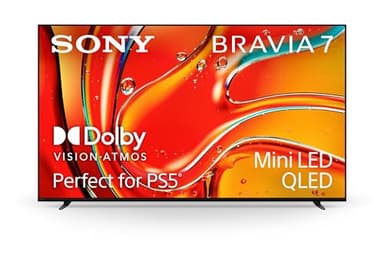
Sony K65XR70 Review
Sony BRAVIA 65-Inch QLED 4K UHD LCD TV, Mini LED Brightness and Contrast, XR Processor, Google TV, Gaming Optimization
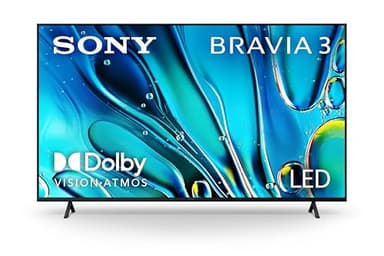
Sony K65S30 Review
Sony BRAVIA 3 65-Inch 4K Ultra HD LED Smart TV with Google TV, Dolby Vision HDR, and Triluminos Pro
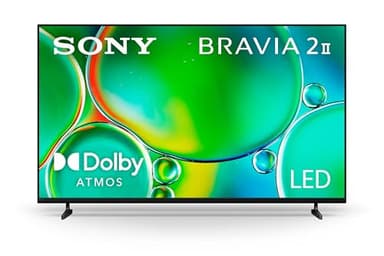
Sony K65S20M2 Review
Sony 65 Inch BRAVIA 2 II LED 4K HDR Smart Google TV (K-65S20M2) | Exclusive Features for PlayStation®5, Motionflow XR, 4K Processor X1 with 4K X-Reality PRO, Triluminos Pro
Simplified Buying Guide
Choosing the right screen size is the first and most important decision you'll make. TV screens are measured diagonally from corner to corner, not horizontally. So, a 65-inch TV is 65 inches from the top left corner to the bottom right.
Forget complicated math. A simple rule for finding the ideal size is to consider your viewing distance - how far you sit from the screen. For a comfortable, immersive experience without eye strain, divide your viewing distance in inches by 1.5. For example, if you sit 8 feet (96 inches) away, a 65-inch TV (96 / 1.5 = 64) is a great starting point.
Thanks to today's ultra-thin frames (bezels), you can often fit a larger screen into the same space a smaller, older TV once occupied. When in doubt, most people regret going too small rather than too big. A larger screen provides a more cinematic and engaging experience, especially with high-resolution 4K content.
Resolution refers to the number of tiny dots, or pixels, that make up the picture on the screen. More pixels mean a sharper, more detailed image. Think of it as the difference between a blurry photo and a crystal-clear one.
Here’s what you need to know about the common resolutions:
- 1080p (Full HD): This was the standard for years, with about 2 million pixels. Today, it’s mostly found on smaller, budget TVs (under 40 inches). It's fine for a bedroom or kitchen, but for your main living room TV, you should aim higher.
- 4K (Ultra HD): This is the current standard and the sweet spot for price and performance. With over 8 million pixels (four times that of 1080p), 4K delivers a significantly sharper and more lifelike picture. Nearly all new content from streaming services like Netflix, game consoles like the PlayStation 5, and physical media is available in 4K. For most people, a 4K TV is the right choice.
- 8K: This is the next step up, boasting a staggering 33 million pixels. The detail can be incredible, but there's a catch: there is virtually no native 8K content available yet. Your TV will have to 'upscale' 4K and 1080p content to fit the screen. While the technology is impressive, 8K TVs are very expensive and, for now, offer little practical benefit over 4K for the vast majority of viewers.
The display technology is the engine behind your TV's picture quality. It dictates how the screen creates light and color, which directly impacts everything from how deep the blacks are to how vibrant the colors look. Here are the main types you'll encounter.
- LED: This is the most common technology. LED TVs are actually LCD TVs that use Light Emitting Diodes (LEDs) as a backlight to illuminate the picture. They are affordable and perform well in most lighting conditions. However, the quality can vary significantly based on the backlighting system used (more on that later).
- QLED (Quantum Dot LED): Don't let the similar name fool you; this is a significant upgrade over standard LED. A QLED TV is an LED TV that uses a special layer of microscopic 'quantum dots' to produce more vibrant and accurate colors. QLEDs are known for being very bright, making them an excellent choice for well-lit rooms.
- OLED (Organic Light Emitting Diode): This is a premium display technology. Unlike LED/QLED, OLED pixels create their own light. This means a pixel can turn completely off, resulting in perfect, absolute black with zero light bleed. This creates what's called 'infinite contrast,' making colors look incredibly rich and lifelike. OLED is the top choice for movie enthusiasts and anyone who does a lot of viewing in a dark room.
- QD-OLED (Quantum Dot OLED): The latest innovation, QD-OLED combines the best of both worlds. It uses the self-lit pixels of OLED but enhances them with a Quantum Dot layer. The result is the perfect black levels and infinite contrast of OLED, but with even brighter highlights and a wider range of colors than traditional OLEDs. This is the cutting-edge of TV technology right now.
TV manufacturers release new models every year, much like car companies. While it might seem like you always need the newest version, understanding the model year helps you find the best value for your money.
A TV's model year tells you when it was designed and released, which indicates the level of technology inside. Here is a general guide to what you can expect from different years:
- 2024-2025: These are the latest models. They will have the most up-to-date processors for fast smart TV menus, the newest picture quality enhancements, and support for all the latest gaming features and HDR formats. You pay a premium for being on the cutting edge.
- 2022-2023: This is often the sweet spot for value. These TVs are recent enough to have mature 4K and HDR technology, robust smart features, and great picture quality that is often very close to the newest models. As retailers make room for new inventory, you can find significant discounts on these high-performing sets.
- 2020-2021: Solid 4K TVs are available from this period. This is when features like HDMI 2.1 (essential for PS5 and Xbox Series X gamers wanting 4K at 120Hz) started to become more common on mid-range and high-end sets. However, smart TV interfaces from this era may feel a bit slower than current ones.
- 2018-2019: During these years, 4K was standard and HDR was a common feature on most quality TVs. However, the brightness and performance of HDR were generally not as good as in later models. These TVs are perfectly fine for general viewing but might lack the latest gaming features or more advanced HDR format support.
- 2017 and Older:Technology from this period is noticeably dated. While you'll find 4K TVs from 2017, they represent an earlier generation of that technology. Going back to 2014-2016, you're looking at the very first wave of consumer 4K TVs, which lacked many of the refinements, like HDR, that make modern 4K content look so good. Anything older than that is likely a 1080p model. We would not recommend purchasing a primary TV from this era.
Our advice: If you want the latest technology and plan to keep your TV for many years, buy a current model. If you want the best performance for your dollar, look for a discounted high-end model from the previous year.
High Dynamic Range, or HDR, is a technology that dramatically improves picture quality. It expands the range of both contrast and color. In simple terms, this means the bright parts of the image can get much brighter, and the dark parts can get much darker, all while showing more shades of color in between. The result is a more realistic, vibrant, and impactful image that looks closer to how we see the real world.
However, not all HDR is the same. There are several different formats, and the formats a TV supports determine what content you can watch in the best possible quality.
- HDR10: This is the base-level, open standard for HDR. Every HDR TV supports it, and most HDR content is available in this format. It uses 'static metadata,' which means it sets a single brightness and color level for the entire movie or show. It's a huge step up from non-HDR, but less advanced than other formats.
- HDR10+: This is an enhanced, royalty-free version of HDR10. Its key feature is 'dynamic metadata,' which allows the TV to adjust brightness and tone mapping on a scene-by-scene or even frame-by-frame basis. This leads to a more optimized picture throughout whatever you're watching. It is primarily backed by Samsung and is supported by services like Amazon Prime Video and Apple TV+.
- Dolby Vision: This is a proprietary format from Dolby Labs that also uses 'dynamic metadata' to optimize the picture frame-by-frame. It's known for its stringent certification process and is often considered the premium HDR experience. Dolby Vision has widespread support across major streaming services like Netflix, Disney+, Max, and on 4K Blu-ray discs. Many TV manufacturers, including LG, Sony, and TCL, support it.
- HLG (Hybrid Log-Gamma): This format was developed primarily for live broadcast television. It's a clever solution created by the BBC and Japan's NHK that allows a single signal to be broadcast that works on both new HDR displays and older, non-HDR (SDR) TVs. You'll mainly see this used for live sports and events.
- Dolby Vision IQ & HDR10+ Adaptive: These are not new formats, but rather enhancements to Dolby Vision and HDR10+. They use a light sensor built into the TV to measure the ambient light in your room. The TV then automatically adjusts the HDR picture to compensate. This ensures that dark scenes don't look too dim when you're watching in a bright room, and that you're not blinded by bright highlights in a dark room.
What should you look for? A TV that supports more formats gives you more flexibility. Ideally, you want a TV that supports both Dolby Vision and HDR10+. This ensures you'll get the best dynamic HDR experience from virtually any content source. If you have to choose, Dolby Vision currently has broader support across the most popular streaming services.
While a dedicated soundbar is always recommended for the best audio experience, modern TVs have made significant strides in built-in sound quality. These features aim to create a more immersive and clear audio experience right out of the box.
Understanding them can help you decide if a TV's native audio is good enough for your needs or if you'll need to budget for an external sound system.
Here’s a breakdown of common sound technologies you'll encounter:
- Built-in Up-firing Speakers: These speakers are physically angled upwards to bounce sound off your ceiling. This creates a height dimension to the audio, which is crucial for immersive sound formats like Dolby Atmos. It makes effects like rain or a helicopter flying overhead feel more realistic, as if the sound is truly coming from above.
- Built-in Subwoofer: A subwoofer is a speaker dedicated to handling low-frequency sounds, otherwise known as bass. A TV with a built-in subwoofer will deliver deeper, more impactful bass, making movie explosions, action sequences, and music feel much richer and more powerful compared to TVs without one.
- Clear Voice: This is a processing feature designed to enhance the clarity of human voices. It intelligently identifies and boosts dialogue frequencies, making conversations easier to understand, especially during scenes with loud background music or sound effects. It's a fantastic feature if you often find yourself reaching for the remote to turn up the volume during quiet talking scenes.
- Object Tracking Sound (OTS): This technology uses multiple speakers placed around the TV to make sound follow the action on screen. For example, if a car drives from the left side of the screen to the right, the sound will pan across the TV's speakers to match the movement. This creates a more dynamic and engaging soundscape that feels larger than the TV itself.
- AI Sound Pro: This feature uses artificial intelligence to analyze what you're watching in real-time. It automatically identifies the content type—whether it's a movie, sports, news, or music—and adjusts the audio settings for the optimal listening experience. It aims to provide the best sound profile for any situation without you needing to manually adjust settings.
A TV's refresh rate, measured in Hertz (Hz), tells you how many times per second the image on the screen is updated. A higher number means the image is redrawn more frequently, which can lead to a smoother and clearer picture, especially with fast motion.
It’s important to look for the 'native' refresh rate and not be confused by marketing terms like 'Motion Rate' or 'TruMotion,' which use software tricks to simulate a higher number. The true native rates are almost always 60Hz or 120Hz.
- 60Hz: This is the standard refresh rate for most televisions. The screen refreshes the image 60 times per second. For watching movies and most TV shows, which are typically filmed at 24 or 30 frames per second, a 60Hz TV is perfectly sufficient. The motion will look as the director intended.
- 120Hz: A 120Hz TV refreshes the screen 120 times per second. The primary benefit of this is a significant reduction in motion blur. Fast-moving objects appear sharper and more distinct. This makes a noticeable difference in two key areas:
- 1. Sports: When watching fast-paced sports like hockey or soccer, a 120Hz screen keeps the puck or ball from turning into a blurry streak as it flies across the screen.
- 2. Video Games: This is where 120Hz matters most. Modern consoles like the PlayStation 5 and Xbox Series X can output games at 120 frames per second. To take advantage of this ultra-smooth gameplay, you must have a TV with a 120Hz native refresh rate. It provides a more responsive and visually fluid gaming experience.
Who needs 120Hz? If you are a serious gamer with a new-generation console, or a passionate sports fan who hates motion blur, a 120Hz TV is a highly recommended upgrade. For everyone else who primarily watches movies and TV series, a 60Hz TV will deliver an excellent experience and can save you some money.
Think of audio formats as the language your TV uses to create immersive, three-dimensional sound. While your TV's built-in speakers can play the sound, to truly experience these formats, you'll want to connect a compatible soundbar or a full home theater system. The goal here is to make it feel like the action on screen is happening all around you.
Here are the two main formats you'll see:
- Dolby Atmos: This is the big one. Dolby Atmos is the most popular and widely supported immersive audio format. It works by treating sounds as individual objects that can be placed anywhere in a 3D space, including overhead. The result? A helicopter flying above in a movie will sound like it's actually above you. Most major streaming services like Netflix, Disney+, and Prime Video use Dolby Atmos for their premium content. If you want the best, most compatible audio experience, Dolby Atmos support is a must-have.
- DTS:X: This is the main competitor to Dolby Atmos. Like Atmos, DTS:X is an object-based audio format that creates a multi-dimensional soundscape. While it's less common on streaming services, you'll find it on many 4K Blu-ray discs. It's known for offering a slightly less compressed, and some say purer, audio signal. Having DTS:X support is a great bonus, especially for physical media enthusiasts.
The bottom line: A TV that supports both Dolby Atmos and DTS:X offers the most flexibility. However, if you have to choose, prioritize Dolby Atmos due to its overwhelming support across streaming platforms.
9 Sony Kd65x85k 65 Inch TV Review deals are available from: Amazon, starting from $699.99.
The biggest discount we found is 55% on Sony 65 Inch OLED 4K Ultra HD TV BRAVIA XR8B Smart Google TV with Dolby Vision HDR and Exclusive Features for PlayStation® 5 (K-65XR8B), 2025 Model (Renewed) at Amazon.
The lowest price we found is $699.99 while the highest is $2,798.00. Prices for the best Sony Kd65x85k 65 Inch TV Review deals average at $1,220.88.
Last updated on October 23, 2026.
We scanned these quality online stores and more to deliver you with the best offers online available for Sony Kd65x85k 65 Inch TV Review.
Our Ranking Process
We analyzed thousands of deals using our proprietary SmartDeal algorithm.
Discount Depth
Verifying true historical lows vs seasonal noise.
Price History
365-day tracking to establish a fair median baseline.
User Ratings
Aggregated verified reviews for long-term satisfaction.
Value Ratio
Weighing features vs cost for maximum utility.
Popularity
Real-time demand tracking for trending items.