Today's best Wearable Tech Virtual Reality Gear products & deals of 2026
- Discount Depth & Duration
- Median Price Tracking
- Customer Feedback & Ratings
- Price-to-Value Ratio
- Market Demand & Popularity






Our Ranking Process
We analyzed thousands of deals using our proprietary SmartDeal algorithm.
Discount Depth
Verifying true historical lows vs seasonal noise.
Price History
365-day tracking to establish a fair median baseline.
User Ratings
Aggregated verified reviews for long-term satisfaction.
Value Ratio
Weighing features vs cost for maximum utility.
Popularity
Real-time demand tracking for trending items.


Get Our Best Deals Sent to Your Inbox
We scour deals so you don't have to. Get alerts when top brands hit their lowest historical prices.
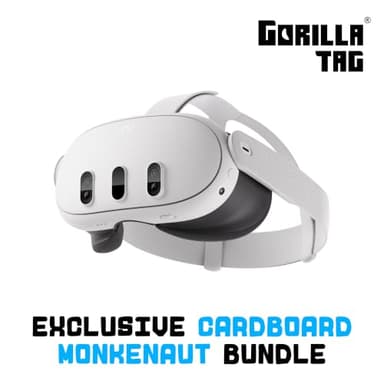
Meta 899-00585-01 Review
Meta Quest 3 512GB | VR Without Wires — Gorilla Tag Cardboard Monkenaut Bundle — Amazon Exclusive— Access to 100+ Games with a 3-Month Trial of Meta Horizon+ Included
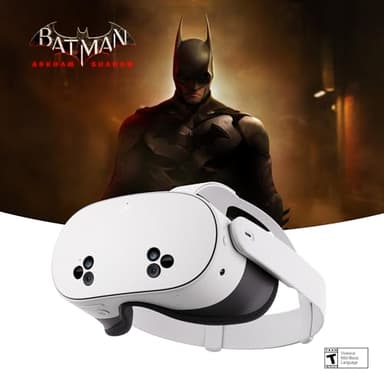
Meta Quest 3S Review
Meta Quest 3S 256GB | VR Headset — Thirty-Three Percent More Memory — 2X Graphical Processing Power — Virtual Reality Without Wires — Get Batman: Arkham Shadow Included Plus Access to 40+ Games
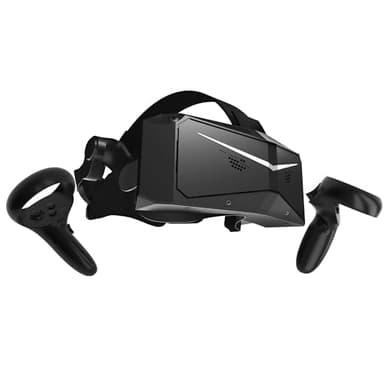
Pimax Full Payment Version Review
Pimax Crystal Light VR Headset for PC, 2880x2880 per Eye, 8K QLED Display with Local-Dimming, Inside-Out Tracking, PC VR Headset for Flight Sims, iRacing & Gaming (Full Payment Version)
Simplified Buying Guide
This is the most important choice you'll make, as it determines what games and experiences you can access. It's the "brain" of your VR system.
- Standalone: These are all-in-one headsets (like the Meta Quest series) that have the computer, storage, and battery built right in. You are completely wireless and free to move. This is the most popular and convenient option for most people.
- PC VR: These headsets (like the Valve Index) tether to a powerful gaming PC. This setup unlocks the most graphically intense, complex, and high-fidelity VR experiences possible, but it requires a significant investment in a gaming computer and involves a cable (or a high-end wireless setup).
- Console: This category is currently owned by Sony's PlayStation VR2, which connects directly to a PlayStation 5. It's a fantastic, powerful, and simple-to-use option if you already own the console.
- Smartphone: These are simple shells (like DESTEK, TECKNET, or Orzly) that use your smartphone as the screen and processor. This is the most basic entry point, best for simple 360-degree videos, and is not suitable for true VR gaming.
For most users, Standalone offers the best balance of freedom, price, and performance. PC VR is for enthusiasts seeking maximum power, and Console VR is the clear choice for PS5 owners.
What do you want to see? This feature defines whether you completely escape the real world or bring the virtual world into yours.
- Virtual Reality (VR): This is the classic, fully immersive experience. The headset completely blocks your view of the real world and transports you to a digital one. This is what most VR gaming is based on.
- Mixed Reality (MR): This is a more advanced feature where the headset uses built-in cameras to show you your real surroundings, but overlays digital objects and information on top of it. You could play a virtual piano on your real coffee table or see virtual characters running around your living room.
All MR headsets can do VR, but not all VR headsets can do MR. True MR requires Full-Color Passthrough (seeing the world in color, not black and white), which is becoming a key feature in newer, more premium headsets.
This group of specs determines how clear, smooth, and expansive the virtual world looks. They are the key to immersion and preventing the "screen door effect" (seeing the pixels).
- Resolution: The number of pixels in the display, often measured per eye. Higher is sharper. Standard Definition is obsolete. High Resolution is the common baseline (e.g., Quest 2). 4K and 4K+ (per eye) are found in premium headsets and offer significantly clearer, crisper images.
- Display Type: This is the screen technology. LCD is the workhorse, offering good brightness and solid performance. OLED or Quantum Dot (QLED) displays are a major step up, offering perfect blacks and much more vibrant colors, which makes dark scenes incredibly immersive.
- Refresh Rate: How many times the image updates per second, measured in Hertz (Hz). A higher number means a smoother, more realistic image and less chance of motion sickness. 72 Hz is the absolute minimum. 90 Hz is the comfortable standard for most people. 120 Hz is exceptionally smooth and ideal for fast-paced action.
- Field of View (FOV): This is your peripheral vision, measured in degrees. A wider FOV is more immersive and feels less like you're looking through binoculars. Under 100° can feel restrictive. 100° - 110° is the common standard for most consumer headsets. 111° - 120° or Over 120° is considered very wide and is a premium feature.
Don't just chase the highest number. A good balance is key. Aim for at least 90 Hz and 100° - 110° FOV. An OLED display and 4K resolution are significant, tangible upgrades if your budget allows.
How does the headset know where you are, and how do you interact with the world? This is all about tracking technology.
- Inside-Out (No Stations): This is the modern standard. Cameras built directly into the headset scan the room to track your head and controller movements. It's incredibly convenient: just put on the headset and you're ready.
- External (Base Station): This system (used by the Valve Index) requires setting up two or more small "lighthouse" sensors in your room. While it's more setup, it provides flawless, sub-millimeter, rock-solid tracking over a large area and is the gold standard for precision.
- Hand Tracking: A feature of inside-out systems that allows you to ditch the controllers entirely and use your real hands to navigate menus and interact with some apps. It's intuitive, but less precise than controllers for complex games.
For 99% of users, Inside-Out tracking is the way to go. It's simple, reliable, and more than good enough for any game. External tracking is for dedicated enthusiasts who demand absolute perfection.
A headset can have the best specs in the world, but if it's uncomfortable, you won't use it. Fit and ergonomics are crucial for long play sessions.
- Adjustable IPD: IPD stands for Inter-Pupillary Distance, the distance between your eyes. A headset with an Adjustable IPD (either a physical slider or software setting) is essential to get a sharp, focused, and comfortable image that doesn't cause eye strain.
- Glasses Compatible: This means the headset has enough room in the facial interface to be worn comfortably over most prescription glasses. If you wear glasses, this is a non-negotiable feature.
- Adjustable Diopters: A premium, rare feature that lets you *dial in* your eyeglass prescription directly on the headset lenses, allowing you to play *without* your glasses at all.
Do not underestimate comfort. A good fit, manageable weight, and the ability to match your IPD and accommodate glasses are what separate a good headset from a great one.
These are the features that add new layers of believability and interaction, making the virtual experience feel more real.
- Eye Tracking: Internal sensors watch where your pupils are looking. This allows for advanced social avatars that can make eye contact, and a graphics-boosting trick called "foveated rendering" where the headset only renders what you're directly looking at in full detail.
- Face Tracking: Similar to eye tracking, this captures your facial expressions (mouth, cheeks, eyebrows) and maps them to your virtual avatar for incredibly realistic social interaction.
- 3D Audio: This creates a 360-degree soundscape where you can pinpoint the direction of sounds—above, below, and behind you. This is standard on virtually all modern headsets, either through Built-in Headphones or high-quality speakers integrated into the strap.
- Headset Haptics: The headset itself provides subtle vibrations to simulate sensations, like the wind rushing past your face or the impact of a virtual punch.
While 3D audio is a given, features like eye and face tracking are cutting-edge additions found in premium devices like the PS VR2 and Meta Quest Pro, pointing to the future of social VR.
This covers the practical, everyday considerations of using your headset.
- Storage: This applies only to Standalone headsets. It's how many games and apps you can have installed at once. 64 GB is small and will fill up fast. 128 GB is a good starting point for most people. 256 GB or 512 GB is for the power user who wants a large library ready to go.
- Connectivity: USB-C is the standard for charging and connecting to a PC (for PC VR). DisplayPort is a dedicated video cable used by some high-end PC VR headsets. Wi-Fi is essential for standalone headsets to download games and stream, with Wi-Fi 6 or 6E being the best for wireless PC VR streaming. Bluetooth is used for controllers and optional headphones.
- Swappable Battery: A rare but highly useful feature that lets you swap a dead battery for a fresh one to keep playing without being tethered to a charging cable.
For standalone users, we strongly recommend at least 128 GB of storage. Games are getting bigger, and you'll appreciate the extra space very quickly.
This category is a bit different. These headsets are just plastic holders for your phone. Your phone's compatibility is all that matters.
- Phone Size: The headset is designed to hold a phone within a specific size range. Most modern holders are flexible, supporting common sizes like 4.7 in to 6.0 in or 6.1 in to 7.2 in.
- Anti-Blue Light Lenses: This is a common feature to help reduce eye strain from having a smartphone screen so close to your eyes.
While a cheap way to see 360-degree videos, smartphone VR does not offer the interactive, 6-degree-of-freedom tracking that defines modern VR. We recommend saving for a standalone headset for a true VR experience.
While many companies make VR gear, a few big names dominate the market and define the major platforms.
- Meta: The market leader. Their Quest line of Standalone headsets is the most popular, mainstream VR platform, with a massive library of games and apps.
- PlayStation (Sony): The sole player in the Console space. Their PS VR2 is a powerful and innovative headset that tethers exclusively to the PlayStation 5.
- Valve: A giant in PC VR. Their Valve Index headset is a high-end, enthusiast-grade favorite, and their Steam platform is the largest store for PC VR games.
- HTC: A veteran in the VR space. Their Vive series includes a wide range of headsets, from high-end PC VR models for enthusiasts to Standalone devices for business and consumers.
- Samsung: While once a leader in Smartphone VR with their Gear VR, they have become less active in the consumer VR market recently.
Your choice of brand is often tied to your choice of platform. Meta is the default for standalone, PlayStation for console, and Valve or HTC for high-end PC VR.
10 Wearable Tech Virtual Reality Gear deals are available from: Amazon, starting from $16.99.
The biggest discount we found is 6% on YOGES Adjustable Length VR Golf Club Handle Compatible with Oculus Quest 2 Accessories, Virtual Reality Controller Attachment, Simulator Real Golf Game Bat Adapter for Golf+, Walkabout Mini Golf (Q6-G) at Amazon.
The lowest price we found is $16.99 while the highest is $1,799.00. Prices for the best Wearable Tech Virtual Reality Gear deals average at $430.65.
Last updated on July 26, 2026.
We scanned these quality online stores and more to deliver you with the best offers online available for Wearable Tech Virtual Reality Gear.
Get Our Best Deals Sent to Your Inbox
We scour deals so you don't have to. Get alerts when top brands hit their lowest historical prices.