The 10 Best Relic Hunting Metal Detectors of 2026
- Verified Sales Volume
- Refund & Return Rates
- Real-world Performance
- Price-to-Value Ratio
- Product Ratings & Review Sentiment






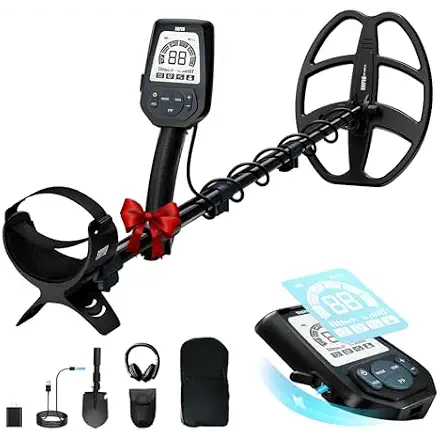


Detectors are optimized for specific hunts, and matching the machine to your intended targets saves both money and frustration. Think about where you'll realistically spend your weekends.
- Coin Hunting is the most common use, done in parks, schoolyards, and old lawns. Almost any mid-range detector handles it well.
- Relic Hunting means old iron, brass, and lead at historic sites, which demands strong iron discrimination and good target separation in trashy ground.
- Beach Hunting pushes hardware harder because salt and wet sand interfere with detection. Look for beach mode or multi-frequency operation.
- Shallow Water wading requires a waterproof coil and lower shaft at minimum, plus a control box that tolerates splashes.
- Diving requires a fully submersible detector rated to a stated depth in feet or meters, along with waterproof headphones.
- Gold Prospecting needs high frequency or pulse induction plus manual ground balance to cope with mineralized soil and tiny nuggets.
- Jewelry Finding favors sensitivity to small gold and thin chains, which often means notching out pull tabs is a bad idea since rings ring up in the same range.
- Yard & Garden use is casual: finding sprinkler heads, lost keys, or property markers. A basic detector or magnetic locator does the job.
- Utility Locating means pipes, valve boxes, and rebar, which calls for a magnetic locator or deep-seeking equipment rather than a hobby detector.
- Security Screening requires a handheld wand or walk-through unit, not a ground detector.
Pick your primary hunt and buy for that, then check that the detector is at least competent at your secondary one. A machine bought for gold country will disappoint you on a salt beach and vice versa.
Most people are best served spending somewhere in the low-to-mid hundreds for a first real metal detector. Under about fifty dollars you're usually buying a toy that only reaches a few inches deep and beeps at everything, which tends to kill enthusiasm quickly. A solid beginner or entry-level hobbyist machine from an established brand will find actual coins and jewelry at usable depth, and it will still be worth something if you decide to upgrade or sell later.
Was this helpful?
Pinpointers are almost always sold separately, though some detectors are bundled with one as a kit. Most full-size detectors have a built-in pinpoint mode that narrows the signal, but a handheld pinpointer probe finds the exact object inside the hole you've already dug. Nearly every experienced hunter considers one essential because it saves an enormous amount of digging time and keeps holes small, so budget for it either as part of a kit or as your first accessory.
Was this helpful?
It depends entirely on where you plan to hunt. Almost every detector has a waterproof coil, which is all you need for dry sand, parks, fields, and wading a few inches at the shoreline. A fully submersible detector with a sealed control box costs considerably more and only makes sense if you'll be wading deep, snorkeling, or diving. Read listings carefully, since "waterproof coil" and "waterproof detector" are very different things.
Was this helpful?
Yes, but the stock coil on most detectors is sized well for general use. Coils in the nine to eleven inch range balance depth, ground coverage, and the ability to separate nearby targets, which suits nearly every hunting situation. Smaller coils work better in trashy ground and tight spaces, while larger coils cover more ground and reach deeper but miss small items. Check whether the detector accepts aftermarket coils so you can add a small one later instead of buying a second machine.
Was this helpful?
Single frequency is perfectly capable for inland hunting in parks, yards, and fields, and it keeps the price much lower. Multi-frequency machines cost significantly more but handle salt water, wet sand, and mineralized soil far better while identifying mixed targets more accurately. If salt beaches or gold prospecting are in your plans, paying for multi-frequency up front usually saves you from buying twice.
Was this helpful?
Online-first budget brands can be a reasonable choice for casual use, kids, or simply testing whether you enjoy the hobby. They often list impressive feature lists at low prices, but build quality, waterproof seals, warranty support, and parts availability are inconsistent. If you expect to hunt regularly, an established brand will perform better, last longer, and hold resale value. For a gift or occasional backyard use, a budget model gets the job done without much financial risk.
Was this helpful?
Was this helpful?