The 10 Best 600 dpi Printers of 2026
- Verified Sales Volume
- Refund & Return Rates
- Real-world Performance
- Price-to-Value Ratio
- Product Ratings & Review Sentiment





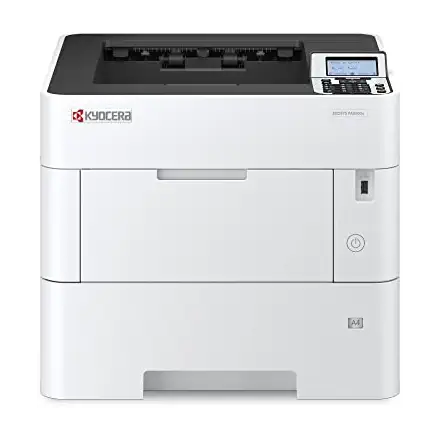


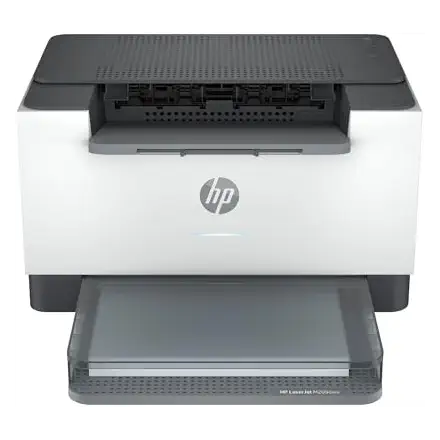


Resolution is measured in dots per inch (dpi) and controls fine detail. Higher isn't universally better, because the right number depends entirely on what you're printing.
- 203 dpi — The thermal label and receipt standard. Perfectly crisp for barcodes, addresses, and shipping labels.
- 300 dpi — Higher-detail thermal printing for small text, dense barcodes, and detailed sticker or stencil work.
- 600 dpi — The laser document baseline. Produces clean, professional text and acceptable business graphics.
- 1200 dpi — Sharper laser output for fine serif type, detailed line art, and polished client-facing documents.
- 2400 dpi and 4800 dpi — Inkjet territory for photos and graphics with smooth gradients and subtle color transitions.
- 5760 dpi — Top-tier photo inkjet resolution, meaningful mainly for large prints viewed up close and paired with premium photo paper.
For text, 600 dpi is plenty; for photos, look past the dpi number to the number of ink colors, since a six-ink printer will outperform a four-ink one at the same resolution.
It comes down to what you print most. Inkjet printers handle color and photos beautifully and cost less upfront, making them a good fit for homes, schoolwork, and creative projects. Laser printers print text faster, produce sharper documents, and cost far less per page, so they suit home offices and anyone printing large volumes of black-and-white paperwork. If you print only occasionally, keep in mind that inkjet ink can dry out between jobs while laser toner does not.
Was this helpful?
Usually yes, if you print regularly. Ink tank models cost more at checkout but use cheap refill bottles instead of cartridges, which can cut your cost per page dramatically and often includes enough ink for thousands of pages in the box. Most people break even within a year or two of steady printing. If you only print a handful of pages a month, a standard inkjet or a basic laser will likely serve you better.
Was this helpful?
Replacement supplies are the real expense of owning a printer, and they vary wildly by model. Before you buy, look up the exact cartridge or toner number for that printer and check its price and page yield, then divide to get a rough cost per page. A cheap printer with expensive proprietary cartridges can easily cost more over two years than a pricier refillable or high-yield model. Also check whether the printer accepts third-party supplies or locks you into brand-only cartridges.
Was this helpful?
Choose an all-in-one if you regularly scan documents, make copies, or need to fax. The added scanner and copier functions are convenient and usually only add modestly to the price. If you scan rarely and are happy using a phone scanning app, a print-only model is smaller, cheaper, and has fewer parts that can fail. Buy for the tasks you do monthly, not the ones you might do someday.
Was this helpful?
For light home use, anything in the 10 to 19 pages per minute range is fine. Home offices and small businesses are comfortable at 20 to 30 pages per minute, and heavy shared use calls for 30 or more. Keep in mind that advertised speeds are best-case figures for plain black text, and color, photo, and double-sided printing will always be slower. If you usually print just one or two pages at a time, first-page-out time matters more than the headline speed.
Was this helpful?
Measure before you order, because printers are bulkier than product photos suggest. Compact all-in-ones and small lasers fit on a shelf or tight desk and suit low-volume users, while full-size desktop models need clearance above for the scanner lid and behind for the rear paper feed. Mini and portable printers are great for travel, photos, and labels but are slow and hold very little paper. Wide-format machines are only worth the space if you genuinely need tabloid or A3 output.
Was this helpful?
Wireless is worth it for almost everyone now, since it lets phones, tablets, and multiple laptops print without cables. Look for Wi-Fi plus AirPrint if you are in an Apple household, and Wi-Fi Direct if you want to print without a router. That said, a USB port is still a valuable backup for a connection that never drops, and an Ethernet port is best for offices needing stable shared access. Note that USB cables are frequently not included in the box.
Was this helpful?
All the major brands make solid machines, so focus on the specific model and its supply costs rather than the logo. Brother is widely trusted for dependable monochrome lasers with affordable toner, Epson and Canon lead on refillable tank systems and photo quality, and HP offers the widest range plus strong apps. For shipping labels, Zebra, Rollo, Dymo, and Munbyn are the specialists. Check recent reviews for your exact model, since reliability can differ significantly within a single brand's lineup.
Was this helpful?