Today's best Alienware Ultrawide Monitor products & deals of 2026
- Discount Depth & Duration
- Median Price Tracking
- Customer Feedback & Ratings
- Price-to-Value Ratio
- Market Demand & Popularity






Our Ranking Process
We analyzed thousands of deals using our proprietary SmartDeal algorithm.
Discount Depth
Verifying true historical lows vs seasonal noise.
Price History
365-day tracking to establish a fair median baseline.
User Ratings
Aggregated verified reviews for long-term satisfaction.
Value Ratio
Weighing features vs cost for maximum utility.
Popularity
Real-time demand tracking for trending items.


Get Our Best Deals Sent to Your Inbox
We scour deals so you don't have to. Get alerts when top brands hit their lowest historical prices.
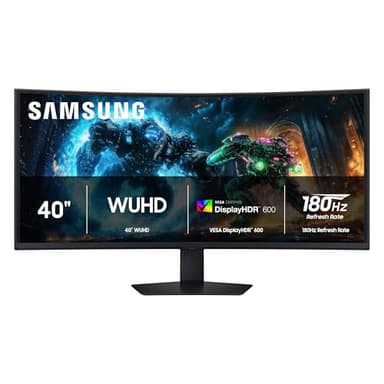
Samsung LS40FG75DENXZA Review
Samsung 40” Odyssey G7 (G75F) Series WUHD Curved Gaming Monitor
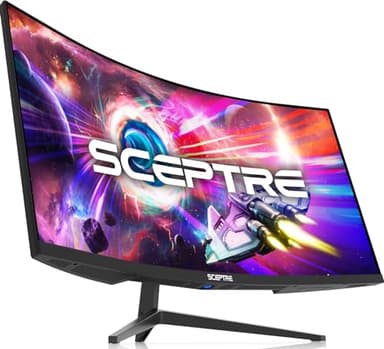
Sceptre C345B-QUT168 Review
Sceptre 34-Inch Curved Ultrawide WQHD Monitor (3440 × 1440), R1500, up to 180Hz/165Hz, DisplayPort x2, 99% sRGB, 1ms, Built-in Speakers, Machine Black, 2025 (C345B-QUT168)
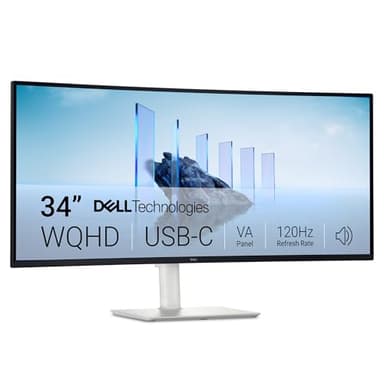
Dell S3425DW Review
Dell 34 Plus USB-C Curved Monitor - S3425DW - 34-inch (3440 x 1440) up to 120 Hz 21:9 Display, VA Panel, AMD FreeSync Premium, 99% sRGB, 95% DCI-P3, Integrated Speakers, 3000:1 Contrast Ratio
Simplified Buying Guide
Your main activity determines everything. A gamer's needs are vastly different from a graphic designer's or an office worker's. Let's break it down.
- Gaming: Here, speed is king. You'll want to prioritize a high refresh rate (144Hz or more), a fast response time (1ms), and adaptive sync technology (G-SYNC or FreeSync) to get the smoothest, most responsive experience possible.
- Office / Everyday Use: Comfort and clarity are key. Look for a monitor with good resolution (at least 1080p), an adjustable stand for ergonomics, and features like a USB-C hub to simplify your desk setup. Screen size is more about personal preference and desk space.
- Creative / Professional: Color is your world. For tasks like photo/video editing and graphic design, color accuracy is non-negotiable. An IPS panel is a must, and you should look for wide color gamut coverage (sRGB, Adobe RGB, DCI-P3) and high resolution (1440p or 4K).
- Portable: For those on the go, a portable monitor is a secondary screen that connects via USB-C. They are lightweight and slim, designed for travel, but often compromise on size and performance features.
Pinpoint your primary use case before you even look at specs. It's the best way to avoid overpaying for features you don't need or getting a monitor that doesn't fit your workflow.
Bigger isn't always better. The right size depends on your desk space and how far you sit from the screen. The aspect ratio defines its width-to-height proportion.
- Under 24" (Small): Ideal for compact desks, secondary monitor setups, or budget-conscious buyers. They are typically 1080p resolution.
- 24" - 27" (Medium): This is the sweet spot for most users. A 24" monitor is great for 1080p gaming and general use, while a 27" monitor is perfect for 1440p resolution, offering a great balance of size and sharpness.
- 28" - 32" (Large): Best paired with 4K resolution to maintain sharpness. These large screens offer an immersive experience for gaming and movies and provide ample screen real estate for productivity.
- 33" & Up (Ultrawide): These monitors are significantly wider than standard screens.
Aspect ratio determines the screen's shape:
- 16:9 (Widescreen): The standard for most monitors and content today. It's versatile for everything from work to watching videos and gaming.
- 21:9 (Ultrawide): Offers a wider, more cinematic field of view, excellent for immersive gaming and productivity, as it can replace a dual-monitor setup.
- 32:9 (Super Ultrawide): The most extreme option, equivalent to two 16:9 monitors side-by-side without a bezel in the middle. It's a powerhouse for multitasking and offers maximum immersion in games that support it.
For most people, a 24" 1080p or 27" 1440p monitor (16:9) is the perfect all-around choice. If you want to replace two monitors or get maximum gaming immersion, consider an ultrawide.
Resolution, or pixel density, is crucial for image clarity. It's important to match your screen size with an appropriate resolution to avoid a blurry or "pixelated" look.
- 1080p (Full HD - 1920x1080): The baseline for a good experience. It's perfect for monitors up to 24 inches and is the easiest to run, making it a great choice for budget builds and competitive gamers who prioritize frame rates.
- 1440p (QHD - 2560x1440): The current sweet spot for many. It offers a significant step up in sharpness from 1080p without being as demanding as 4K. It's the ideal resolution for 27-inch monitors.
- 4K (UHD - 3840x2160): The top tier for detail. Best suited for monitors 28 inches and larger, 4K is fantastic for creative work, watching media, and playing story-driven games, provided you have a powerful graphics card to handle it.
- Ultrawide QHD (3440x1440): This is the most common resolution for 21:9 ultrawide monitors. It gives you the vertical pixel count of 1440p but with extra horizontal space for a wider view.
A 1080p monitor is a great budget or esports option, 1440p is the best all-around choice for most users, and 4K is a premium option for creatives and high-end gaming rigs.
The panel technology inside a monitor is one of the most important factors for image quality. There's no single "best" type; it's a trade-off based on your priorities.
- IPS (In-Plane Switching): The champion of color. IPS panels offer the best color accuracy and widest viewing angles, meaning the picture looks great even when viewed from the side. They are the top choice for creative professionals and anyone who values vibrant, accurate colors. Their response times have improved dramatically, making them great for gaming too.
- VA (Vertical Alignment): The king of contrast. VA panels produce the deepest blacks, making them excellent for watching movies or playing games in a dark room. Their color reproduction is generally better than TN, but viewing angles and response times can be weaker than IPS, sometimes leading to "ghosting" in fast-paced scenes.
- OLED (Organic Light Emitting Diode): The master of all. OLED panels offer the best of both worlds: perfect blacks (because individual pixels can turn off completely), incredible color, and nearly instantaneous response times. The primary downsides are their very high cost and the potential for "burn-in" over time.
- TN (Twisted Nematic): The speed demon. TN panels are the oldest technology but are still used because they offer the fastest response times at the lowest cost. They are a favorite among competitive esports players. However, their color reproduction and viewing angles are the poorest of the bunch.
Go for IPS for excellent all-around performance and color work. Choose VA for high contrast in movies and games. Pick TN for budget-friendly, high-speed competitive gaming. If money is no object, OLED is the pinnacle of image quality.
For gamers, these numbers are critical. For everyone else, they are less important but still good to understand. Refresh rate (measured in Hertz, or Hz) is how many times per second the screen updates the image. Response time (in milliseconds, or ms) is how quickly a pixel can change color.
- Standard (Up to 75Hz): Perfectly fine for office work, browsing the web, and watching videos. You'll get a clean image, and 75Hz offers a small but noticeable improvement in smoothness over the old 60Hz standard.
- High Refresh (76Hz - 144Hz): This is the entry point for serious gaming. A 144Hz monitor makes motion look incredibly fluid, giving you a competitive edge and a more immersive experience. It also makes everyday tasks like scrolling feel much smoother.
- Gaming (145Hz - 240Hz): Aimed at dedicated gamers who want an even greater competitive advantage. The jump from 144Hz to 240Hz is less noticeable than from 60Hz to 144Hz, but for fast-paced shooters, it can make a difference.
- Esports Pro (Over 240Hz): This is the top tier, for professional esports players where every millisecond counts. Requires a very powerful PC to achieve such high frame rates.
Response time is about clarity during motion:
- 1ms or less: The fastest available. This minimizes motion blur and ghosting, keeping the image sharp during fast action. It's a must-have for competitive gaming.
- 2ms - 5ms: Still very fast and perfectly acceptable for most gaming and all general use. You are unlikely to notice any significant motion blur unless you are a highly competitive player.
For non-gamers, a standard 60-75Hz refresh rate is all you need. For gaming, 144Hz and a 1ms response time is the gold standard for a fantastic experience.
If you're a gamer, this is a must-have feature. Screen tearing happens when your graphics card sends frames faster than your monitor can display them, resulting in a "torn" look. Adaptive Sync fixes this.
- NVIDIA G-SYNC: This is NVIDIA's proprietary technology. G-SYNC monitors have a dedicated chip inside that ensures the highest quality sync experience. They are often more expensive but are considered the premium option.
- AMD FreeSync: This is AMD's open-standard alternative. It's more common and generally less expensive. There are different tiers (FreeSync, FreeSync Premium, FreeSync Premium Pro), with the higher tiers offering stricter standards for performance and features like HDR.
- VESA AdaptiveSync: The official open standard from VESA (the group that sets DisplayPort standards). Many "G-SYNC Compatible" monitors are essentially FreeSync/AdaptiveSync displays that NVIDIA has tested and certified to work well with its graphics cards.
Ensure your monitor's adaptive sync technology matches your graphics card (G-SYNC for NVIDIA, FreeSync for AMD). However, many FreeSync monitors are now "G-SYNC Compatible," making them a great value choice for NVIDIA users.
These features can turn a good monitor into a great one by adding convenience and functionality to your setup.
- Curved Screen: Curved monitors, especially ultrawides, are designed to create a more immersive viewing experience by wrapping the image around your field of vision. This can also reduce eye strain by keeping the corners of the screen at a more consistent distance from your eyes.
- Adjustable Stand: An often-overlooked but crucial feature for ergonomics. A good stand allows you to adjust the height, tilt, and swivel of the screen to find the most comfortable viewing position, which can save your neck and back during long sessions.
- Built-in Speakers: These are rarely high-quality but can be convenient if you don't have external speakers and just need basic audio for system sounds or casual video clips. Don't rely on them for gaming or media consumption.
- USB-C Hub / Docking: A game-changer for laptop users. A monitor with a USB-C hub allows you to connect your laptop with a single cable that handles video, data transfer (for keyboards, mice, etc.), and even power delivery to charge your laptop.
- HDR Support: High Dynamic Range (HDR) allows for a wider range of brightness and color, making for more vibrant and realistic images with brighter highlights and deeper shadows. However, true HDR requires high brightness levels, so look for certifications like DisplayHDR 400, 600, or 1000 for a meaningful experience.
An adjustable stand and USB-C hub are fantastic quality-of-life features for productivity. HDR and a curved screen are great enhancements for media and gaming, but make sure they are well-implemented.
You need to make sure your monitor has the right connections for your computer, console, or laptop. Modern monitors have a few key options.
- HDMI: The most common connection type, found on virtually all modern devices from PCs to game consoles and streaming boxes. HDMI 2.0 is needed for 4K at 60Hz, while HDMI 2.1 is required for higher refresh rates at 4K, essential for the latest consoles.
- DisplayPort: The standard for PCs. DisplayPort (DP) typically supports higher refresh rates at high resolutions than HDMI and is the primary way to use adaptive sync technologies like G-SYNC and FreeSync on a PC.
- USB-C / Thunderbolt: The all-in-one connection. A single USB-C cable can carry a video signal (using "DisplayPort Alternate Mode"), transfer data via the monitor's USB ports, and deliver power to charge your laptop. This is the ultimate cable for a clean, minimalist desk setup.
- DVI: An older, legacy port. It's not common on new monitors or graphics cards and is limited in the resolutions and refresh rates it can support. Avoid it unless you need to connect to an older device.
For PC gaming, use DisplayPort. For consoles and general use, HDMI is perfect. For a modern laptop setup, USB-C is the most convenient option available.
Brand reputation is built on consistency, build quality, and support. While you should always judge a monitor on its individual merits and reviews, these are some of the most popular and trusted names in the market.
- Dell: Known for their reliable office and professional monitors (UltraSharp series), but they also produce excellent gaming monitors under their Alienware brand.
- LG: A major panel manufacturer themselves, LG is known for high-performance IPS displays with great color and fast response times, making them popular for both gaming and creative work.
- Samsung: A leader in display technology, known for their high-contrast VA panels and cutting-edge OLED and QLED gaming monitors (Odyssey series).
- Asus: A huge player in the gaming space with their Republic of Gamers (ROG) brand, offering a wide range of high-refresh-rate monitors packed with gaming features. They also make excellent professional (ProArt) displays.
- Acer: Offers a vast selection of monitors, from budget-friendly options to high-end Predator gaming displays that compete directly with Asus ROG.
- BenQ: Highly regarded for their color-accurate professional monitors for photographers and designers, as well as their esports-focused ZOWIE gaming line.
- MSI: Another brand with a strong focus on PC gaming, offering a wide variety of curved and high-refresh-rate monitors at competitive prices.
You can't go wrong with any of these major brands. The most important thing is to read recent, independent reviews of the specific model you're interested in before buying.
9 Alienware Ultrawide Monitor deals are available from: Amazon, starting from $197.97.
The biggest discount we found is 35% on Samsung 40” Odyssey G7 (G75F) Series WUHD Curved Gaming Monitor (LS40FG75DENXZA) at Amazon.
The lowest price we found is $197.97 while the highest is $899.99. Prices for the best Alienware Ultrawide Monitor deals average at $533.99.
Last updated on July 23, 2026.
We scanned these quality online stores and more to deliver you with the best offers online available for Alienware Ultrawide Monitor.
Get Our Best Deals Sent to Your Inbox
We scour deals so you don't have to. Get alerts when top brands hit their lowest historical prices.