The 10 Best Advanced Elements Kayaks of 2026
- Verified Sales Volume
- Refund & Return Rates
- Real-world Performance
- Price-to-Value Ratio
- Product Ratings & Review Sentiment








First things first, how do you want to sit? Your choice here sets the stage for your entire kayaking experience, affecting everything from how wet you get to what kind of water you can tackle. It's like choosing between a convertible and a hardtop—both are great, but for different reasons.
- Sit-on-Top: These are the ultimate user-friendly kayaks. With an open deck, they are incredibly easy to get on and off, making them perfect for beginners, families, and anyone who might want to take a swim. They are self-bailing (water drains out through scupper holes) and generally very stable. They're the top choice for warm climates, fishing, and casual fun.
- Sit-In: These kayaks have a traditional enclosed cockpit. You sit lower in the water, which provides more stability and a more efficient paddle stroke. They protect you from wind and water, making them ideal for cooler conditions and longer trips (touring). They also offer better protection for your gear in dry storage hatches.
For casual fun in the sun, a Sit-on-Top is hard to beat. If you're looking for more performance, speed, and protection from the elements on longer paddles, a Sit-In is your go-to.
The material of your kayak is all about the trade-off between performance, portability, and price. Think of it as choosing the frame for your bicycle—each material offers a different kind of ride and requires a different kind of care.
- Hardshell: Typically made from a durable plastic like polyethylene, these are the most common kayaks. They offer the best performance, durability, and speed on the water. However, they are heavy and require a roof rack and ample storage space.
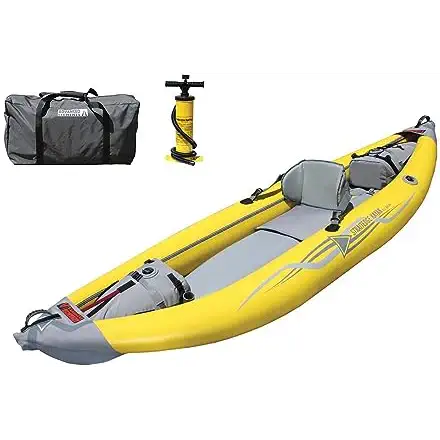
- Inflatable: Don't think pool toy! Modern inflatable kayaks are made from rugged, puncture-resistant materials. Their biggest advantage is portability; they can be deflated and stored in a closet or the trunk of a car. While they don't glide as smoothly as hardshells, they are incredibly convenient and surprisingly durable.
- Folding: The hybrid option. These kayaks use a collapsible frame and a durable skin. They offer performance that's close to a hardshell with portability that rivals an inflatable. They are, however, typically the most expensive option.
If you have the space to store and transport it, a Hardshell offers the best on-water experience. If storage is tight or you want to take your kayak anywhere, go for an Inflatable.
Who's coming along for the ride? This one's pretty straightforward, but it's an important decision. Are you a lone wolf, part of a dynamic duo, or the captain of the family fleet?
- 1 Person: Also known as a solo kayak, this is designed for a single paddler. It's the most common and versatile option, giving you total control over your adventure.
- 2 Person: Called a tandem, this kayak has two seats. It's perfect for paddling with a partner, child, or friend. It requires teamwork to paddle efficiently but can be a lot of fun. Many tandems can also be paddled solo by one person sitting in a central seat.
- 3+ Person: These are less common but are fantastic for families with small children. They typically feature two adult seats and a smaller middle seat or molded area for a child or pet.
Tandem kayaks are great for pairs, but remember that a 1 Person kayak offers more freedom and is often lighter and easier to handle on your own.
What's the plan for your day on the water? A kayak designed for a lazy river is very different from one built to tackle sea waves. Choosing the right tool for the job will make your experience much more enjoyable.
- Recreational: These are the all-rounders. They are stable, easy to turn, and perfect for calm water like lakes and slow-moving rivers. They prioritize fun and stability over speed.
- Fishing: Designed for anglers, these kayaks are typically very stable (some you can even stand on!) and come equipped with features like rod holders, gear tracks, and space for coolers and tackle boxes.
- Touring / Sea Kayaking: Built for speed and tracking straight over long distances. These kayaks are long and narrow with plenty of dry storage for overnight gear. They are best for large lakes and open ocean.
- Whitewater: A highly specialized kayak. They are very short, with curved bottoms (rocker) for extreme maneuverability in rapids. Not for beginners or flatwater paddling.
- Family Fun: This overlaps with recreational but emphasizes safety and ease of use. These are typically stable, sit-on-top models that are durable and great for all ages.
Be honest about how you'll spend 90% of your time on the water. A specialized kayak is great, but a Recreational or Fishing model often offers the most versatility for the average paddler.
How do you want to get from point A to point B? While the paddle is classic, modern kayaks offer some high-tech, leg-powered, and even motorized alternatives. Your arms will thank you for considering these options!
- Paddle: The traditional, time-tested method. It provides a great upper-body workout and is silent, simple, and reliable. It's just you and the water.
- Pedal Drive: This system uses a set of pedals, like a bicycle, to power a propeller or fins under the kayak. It's much more efficient than paddling and frees up your hands for fishing, photography, or just holding a drink. It's a game-changer for anglers.
- Motor Compatible: Some kayaks are designed with a stern that can accommodate a small electric trolling motor. This is the ultimate option for covering long distances without breaking a sweat, perfect for anglers or those with mobility limitations.
While a Paddle is all you truly need, a Pedal Drive system is a revolutionary upgrade, especially for fishing. It allows you to move and cast at the same time.
Size matters, but longer isn't always better. A kayak's length directly impacts its speed, tracking (ability to go straight), and maneuverability. The key is to match the length to your intended use case.
In general, Short kayaks (under 12 feet) are easier to turn, lighter to carry, and simpler to transport. They are fantastic for winding rivers and casual paddles on small lakes. However, they are slower and can be pushed around by wind and waves.
Long kayaks (13 feet and up) are built for performance. They are much faster, track in a straight line with ease, and can handle rougher water. They also have more room for gear, making them the standard for touring and sea kayaking. The downside is they are harder to turn and heavier to manage off the water.
For most beginners and recreational paddlers, a kayak in the 10 to 12-foot range offers a fantastic blend of maneuverability and decent tracking, making it a versatile sweet spot.
This number is more than just your body weight! The weight capacity is the maximum load the kayak can safely handle. Exceeding this limit will cause the kayak to sit too low in the water, making it unstable and difficult to paddle.
To figure out what you need, add up your weight PLUS the weight of everything you plan to bring with you. This includes your paddle, life vest, water, snacks, fishing gear, cooler, camping equipment, and even your dog!
As a smart shopper, always choose a kayak with a weight capacity that is well above your calculated total. For example, if you and your gear weigh 280 lbs, don't buy a kayak with a 300 lb limit. Aim for one in the 350 - 500 lbs range. This extra buoyancy will ensure the kayak performs optimally and remains stable and safe on the water.
The little things can make a big difference. These features are all about comfort, convenience, and customizing your kayak for your specific needs. Look for the ones that will truly enhance your time on the water.
- Fishing Rod Holders: A must-have for any angler, allowing for hands-free trolling or easy storage while paddling.
- Dry Storage Hatches: Sealed compartments that keep your gear (like your phone, wallet, and extra clothes) dry and secure. Essential for longer trips.
- Adjustable Footrests: These allow you to brace your feet comfortably, which is crucial for proper paddling form and power transfer. A key feature for comfort on any paddle longer than 30 minutes.
- Padded / Upgraded Seat: Your backside will thank you. A good seat provides back support and cushioning, turning a long day of paddling from a pain into a pleasure. This is one of the most important comfort features.
- Rudder or Skeg: A rudder (controlled by foot pedals) or a skeg (a fixed drop-down fin) helps the kayak track straight in wind or currents. It's a huge help on long, open-water paddles.
- Accessory Mounts: These are tracks or points on the kayak that allow you to easily attach gear like fish finders, GPS units, cameras, and extra rod holders.
For beginners, adjustable footrests and a comfortable seat are the most important features. For anglers and adventurers, rod holders, dry storage, and accessory mounts are game-changers.
Some kayaks come as a "package deal," which can be a fantastic value, especially for first-time buyers. Pay close attention to what's in the box, as it can save you a lot of money and hassle upfront.
- Paddle: The most common accessory. Included paddles are usually basic, but they'll get you on the water. You can always upgrade later.
- Pump: An essential item for any inflatable kayak. Most come with a basic hand pump.
- Life Vest (PFD): A Personal Flotation Device is a critical piece of safety gear. It's less common to find one included, but it's a great bonus if you do.
- Carry Bag: This is standard for inflatable and folding kayaks and makes transporting and storing them a breeze.
A package that includes a paddle and a PFD is a great find. For inflatables, a pump and carry bag are non-negotiable. While included gear is convenient, be prepared to upgrade your paddle for better performance down the line.
While there are many great brands out there, some have reputations for specific niches. Knowing a little about the major players can help you narrow down your search based on what you're looking for.
- Perception / Wilderness Systems: Well-regarded for making durable, high-quality recreational and touring hardshell kayaks for all skill levels.
- Old Town / Pelican: Known for producing reliable and stable recreational and fishing kayaks that are widely available and great for families and beginners.
- Hobie: The undisputed leader in high-end pedal-drive fishing kayaks. They are known for innovation, quality, and a premium price tag.
- Vibe: A popular brand that offers feature-packed fishing kayaks at a very competitive price point.
- Intex / Sea Eagle: Leaders in the inflatable market. Intex offers incredibly affordable options for casual fun, while Sea Eagle produces more robust, high-performance inflatables for serious adventures.
Don't get too caught up in brand names at first. Instead, focus on the features, style, and use case that best fit your needs. Once you've narrowed that down, you can compare models from trusted brands like these.
Finally, it's important to be honest about your skill and comfort on the water. Choosing a kayak that matches your ability level will ensure you have a safe and enjoyable experience, rather than a frustrating or tippy one!
- Beginner: These kayaks prioritize stability above all else. They are typically wider, shorter, and designed to feel very secure on the water, making them forgiving for new paddlers. They are perfect for calm, flat water.
- Intermediate: A great middle ground. These kayaks offer a balance of stability and performance. They may be a bit longer and narrower than beginner models, providing better speed and tracking without feeling too tippy.
- Advanced: These are high-performance machines. They are often very long and narrow (for touring) or very short and agile (for whitewater). They trade initial stability for top-end speed, efficiency, and responsiveness, and are best suited for experienced paddlers.
It's always smart to start with a Beginner or stable Intermediate kayak. You can have a ton of fun and build skills on a stable platform. You can always upgrade to a more advanced boat later as your skills progress.
Was this helpful?
Was this helpful?
Was this helpful?
Was this helpful?
Was this helpful?
Was this helpful?
Was this helpful?