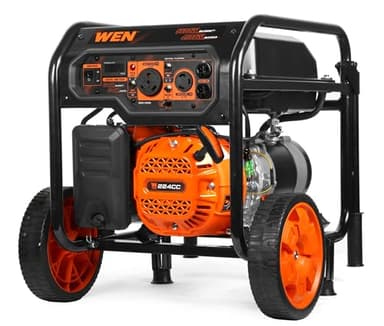
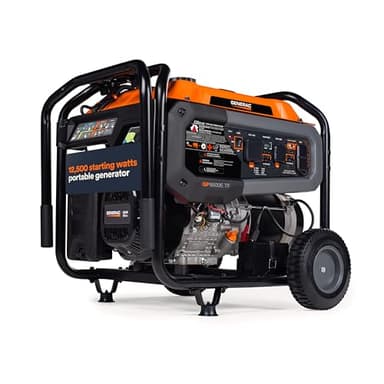
Today's best Generators products & deals of 2026

Updated March 3, 2026
Affiliate Disclosure
We scanned thousands of deals using our proprietary SmartDeal™ algorithm to bring you the best 2026 deals on generators.

Our Ranking Process

We analyzed thousands of deals using our proprietary SmartDeal algorithm.

Discount Depth

Verifying true historical lows vs seasonal noise.

Price History

365-day tracking to establish a fair median baseline.

User Ratings

Aggregated verified reviews for long-term satisfaction.

Value Ratio

Weighing features vs cost for maximum utility.

Popularity

Real-time demand tracking for trending items.


WEN DF680iX Review

WEN 6800-Watt Dual Fuel RV-Ready Electric Start Portable Inverter Generator with Fuel Shut Off and CO Watchdog for Electric Vehicle Backup (DF680iX)
WEN DF680iX
The Verdict
The WEN DF680iX inverter generator presents a strong blend of power and modern features, making it a compelling option for diverse users. Value: This generator delivers significant utility with its dual-fuel capability, running on both gasoline (6800 surge watts, 5100 rated watts) and propane (6000 surge watts, 4500 rated watts), offering flexible power options. Users consistently praise its remarkably quiet operation for an inverter generator of its wattage, noted at 64 dBA at quarter load, making it suitable for noise-sensitive environments like RV parks or residential backup. The electric start ensures reliable, push-button ignition, a convenience highly valued by users. Critical safety features include the WEN Watchdog CO Shutdown Sensor for carbon monoxide detection and an automatic fuel shutoff to maximize engine lifespan and minimize carburetor issues during storage. Its bonded-neutral 240V configuration is a key advantage, supporting low-power Level 2 charging for EVs and household essentials, delivering clean power (low THD) safe for sensitive electronics. Onboard wheels and a telescoping handle enhance its portability for an otherwise robust unit. Trade-off: While generally praised, the DF680iX has some considerations. Its run time and fuel efficiency are somewhat low-end compared to some competitors, offering approximately 6.1 hours at 50% load on a 2.9-gallon gasoline tank, with an estimated consumption of 0.48 GPH at 50% load. Some users have also reported initial starting challenges, particularly with choke settings, though the unit typically runs well once primed. Additionally, like many generators with a voltage selector, it has a limitation of using either 240V or 120V outlets at one time. Verdict: Despite its average fuel efficiency and potential for minor initial startup quirks, the WEN DF680iX remains a highly recommended buy. It stands out as one of the lowest-cost 240V inverter generators on the market that delivers this level of power and feature set. For users prioritizing versatile dual-fuel power, quiet operation, essential safety features, and the unique addition of EV charging capability at a competitive price point, the trade-offs are minor in comparison to the significant value delivered.

Westinghouse WGen5300DFcv Review

Westinghouse 6500 Watt Dual Fuel Home Backup Portable Generator, 5300 Running Watts, 4.7 Gallon Fuel Tank, CO Sensor
Westinghouse WGen5300DFcv
The Verdict
Verdict: Westinghouse WGen5300DFcv Dual Fuel Portable Generator This Westinghouse WGen5300DFcv generator delivers strong, flexible power for home backup and RV applications, distinguishing itself with a dual-fuel capability that ensures reliability when fuel options are limited. Value: The WGen5300DFcv offers substantial utility: 5300 running watts on gasoline (6500 peak) and 4800 running watts on propane (5800 peak), sufficient to power essential household appliances or an RV. Its 4.7-gallon fuel tank provides an impressive run time of up to 14.5 hours on gasoline, minimizing refueling interruptions during extended outages. The inclusion of diverse outlets—standard household, RV-ready TT-30R, and transfer switch ready L14-30R—with protective rubber covers, makes it highly adaptable. Safety is prioritized with an integrated CO Sensor and automatic low oil shutdown. For user convenience, it arrives "plug-and-play" with a wheel kit, oil, funnel, and propane hose, requiring minimal assembly to get operational. The robust 274cc Westinghouse 4-Stroke OHV engine features a durable cast iron sleeve, backed by a solid 3-year limited warranty. Users generally find it quieter than expected for a conventional generator, with a noise rating around 62-68 dBA, placing it among the quieter options in its class. Trade-offs: Despite its strengths, the WGen5300DFcv has a few considerations. While considered relatively quiet for its power class, its noise level of 68 dBA is still noticeable, comparable to "louder than your average lawn mower," indicating it's not a whisper-quiet inverter generator. Fueling can be somewhat awkward, as the gas cap angle may make pouring gasoline prone to spills without careful attention or a specialized funnel. Crucially, with a Total Harmonic Distortion (THD) of ≤23%, it is generally unsuitable for sensitive electronics like computers or certain medical equipment without additional power conditioning, as higher THD can potentially cause damage. Furthermore, it's not the lightest portable generator available, although the included wheel kit mitigates this. Still a Buy: Considering its price point, the Westinghouse WGen5300DFcv remains a strong recommendation for anyone needing reliable, dual-fuel home backup or RV power. The minor inconveniences of noise and fuel filling ergonomics are common to many conventional generators and are outweighed by its substantial power output, extended run time, and comprehensive safety features. The primary functional limitation—its higher THD—is a critical trade-off to acknowledge. However, for users whose essential loads do not include sensitive electronics (or who plan to use dedicated surge protectors/UPS for those items), or for those prioritizing raw power and fuel flexibility for appliances and tools, this generator represents excellent value. It's a dependable workhorse designed for the practical user, not the audiophile or the dedicated electronics enthusiast, making it a clear buy for the right application.

Westinghouse WGen11500TFc Review

Westinghouse 14500 Peak Watt Tri-Fuel Home Backup Portable Generator, 14.5kW Gas, Propane, and Natural Gas Powered
Westinghouse WGen11500TFc
The Verdict
The Westinghouse WGen11500TFc stands as a robust tri-fuel portable generator designed for significant home backup or demanding portable power needs. Its primary value proposition lies in its versatile fuel options—gasoline, propane, and natural gas—providing critical flexibility during varied circumstances or fuel availability challenges. Users appreciate the substantial output, peaking at 14,500 watts on gasoline and offering significant running watts across all fuel types, capable of powering larger homes, including essential appliances like AC units and furnaces. The inclusion of a remote electric start, combined with its transfer switch readiness, streamlines activation and integration into a home's electrical system. The heavy-duty 550cc OHV Westinghouse Engine, featuring a durable cast iron sleeve, ensures longevity, while its low THD (<5%) makes it safe for sensitive electronics. An impressive run time of up to 19 hours on a 9.5-gallon gas tank adds to its utility, backed by a 3-year warranty and a nationwide service network. The primary trade-off with a generator of this power class is its practical portability and noise. While designated as "portable," the WGen11500TFc weighs 230 lbs., making it a substantial unit, albeit one of the lighter options in its wattage category. Its operating volume is rated as low as 74 dBA, which is typical for generators of this size but still loud enough to warrant careful placement or sound mitigation, particularly for residential use. Some users might find the initial factory testing residual oil/fuel odor a minor inconvenience upon unboxing. Despite its weight and noise level, the Westinghouse WGen11500TFc remains a compelling purchase. The capacity to reliably power a large home with the added security of tri-fuel operation, combined with features like remote start and low THD, justifies its footprint and sound output. For those requiring serious backup power or robust portable wattage, the practical value and operational versatility outweigh these inherent characteristics of high-output generators.

Westinghouse WGen9500DF Review

Westinghouse 12500 Watt Dual Fuel Portable Generator, 9500 Running Watts, Remote Electric Start, Transfer Switch Ready, Gas and Propane Powered
Westinghouse WGen9500DF
The Verdict
The Westinghouse WGen9500DF is a powerful, dual-fuel portable generator designed for substantial home backup or demanding job site needs, offering a strong balance of power and practical features. Value: Users consistently praise its impressive power output, delivering 9500 running watts and 12500 peak watts on gasoline, capable of powering major home appliances, including a 3-ton central A/C, refrigerators, and 50-amp ovens, though not all simultaneously. The dual fuel capability (gasoline and propane) provides crucial flexibility, especially during extended outages, with easy switching between fuel types. The inclusion of remote start with a key fob, along with electric and recoil start, is a significant convenience, particularly in adverse weather. It is transfer switch ready with both 30A and 50A outlets, simplifying integration into a home's electrical system for whole-house backup. Expect up to 12 hours of run time on a single 6.6-gallon tank of gasoline. Its robust 457cc Westinghouse engine with a cast iron sleeve ensures durable construction. Trade-off: This generator is heavy at 211 pounds, which, despite integrated wheels and handles, can make significant repositioning challenging. A notable drawback is its Total Harmonic Distortion (THD) of less than 23%, making it generally unsuitable for sensitive electronics without additional power conditioning, as it may cause issues with certain smart devices or UPS systems. Some users have reported intermittent starting issues with the electric or remote start, sometimes linked to the battery or control switch. Additionally, the mode button for the VFT data center is notably small and difficult to operate. Despite these minor inconveniences, the Westinghouse WGen9500DF remains a strong buy for the right application. Its competitive price point, typically ranging from $804.00 to $1,300, combined with its significant power output and dual-fuel versatility, makes it an excellent investment for homeowners needing reliable backup power for essential appliances and more, where the occasional need for sensitive electronics is either addressed by dedicated solutions or not a primary concern.

Simplified Buying Guide

Picking the Best Generator For Your Needs
Running Watts
Running watts, also called rated or continuous watts, represent the power a generator can consistently produce over long periods. Think of it as the generator's everyday strength. This number is crucial because it tells you how many appliances and devices you can run simultaneously. To figure out your needs, add up the running watts of everything you plan to power. It's wise to choose a generator with a running wattage that's a bit higher than your total to avoid overworking the machine. For example, if your essentials add up to 3,000 watts, a generator with at least 3,500 running watts would be a comfortable choice.

You'll find the running watts for most appliances on their labels or in the owner's manual. Keep in mind that devices with motors, like refrigerators and air conditioners, require a lot more power to start up than they do to run continuously. That's where 'Starting Watts' come in, but for keeping things running smoothly, the running watts figure is your key number.
Fuel Type
Choosing the right fuel is a critical first step. Your decision here affects convenience, running costs, and how easily you can find fuel during a power outage. Think about what's most accessible and practical for you.
Each fuel source comes with its own set of pros and cons, from storage life to noise level. Below, we break down the most common types to help you decide.
  • Gasoline: This is the most common fuel for portable generators. It's easy to find and delivers strong power output. However, gasoline has a short shelf life—it can degrade in just a few months without a stabilizer. Storing large amounts safely can also be a challenge.
  • Propane: An excellent choice for emergency preparedness. Propane boasts a very long shelf life and can be stored indefinitely in common BBQ-style tanks. It burns cleaner than gasoline, which can lead to less engine wear over time, but it's slightly less energy-efficient.
  • Diesel: The go-to for large, powerful generators like home standby and commercial units. Diesel is highly fuel-efficient, offering longer runtimes and engine life. It's also less flammable than gasoline, but the engines are typically heavier and louder.
  • Natural Gas: The peak of convenience for home backup power. A standby generator can be hooked directly into your home's natural gas line, providing a nearly endless fuel supply. This is a true 'set it and forget it' solution that eliminates the need to refuel during an emergency.
  • Solar: The modern, clean-energy option. These are not traditional generators but are actually portable power stations or battery banks. They store electricity—gathered from solar panels or a wall outlet—to be used later. They are silent, emission-free, and safe for indoor use, but their runtime is limited by battery capacity and reliant on sunlight for recharging.
  • Dual-Fuel: Get the best of both worlds. Dual-fuel models offer great flexibility, typically running on gasoline and propane. This lets you use whichever fuel is more available or affordable. It's a popular feature that adds a layer of security to your power plan.
  • Tri-Fuel: The ultimate in fuel choice. Tri-fuel generators provide maximum versatility by running on gasoline, propane, and natural gas. This combination ensures you can keep the power on using portable tanks or a continuous home fuel line, making you ready for almost any situation.
Features
Beyond just providing power, many generators come with features designed to make them safer, more convenient, and longer-lasting. Understanding these features will help you choose a model that truly fits your needs, whether you're dealing with a power outage or setting up camp.

Here are some of the most common features and what they mean for you:
  • Low Oil Shutoff: This is a must-have engine-saving feature. A sensor monitors the oil level and automatically shuts down the generator if it gets too low, preventing catastrophic engine damage. Don't buy a generator without it.
  • Overload Protection: Think of this as a circuit breaker for your generator. If you try to draw more power than the generator can handle, it will trip a breaker instead of frying its internal components or your connected devices.
  • Fuel Gauge: A simple but crucial feature. A visual gauge lets you see how much fuel you have left at a glance, so you're not left guessing when you'll need to refuel.
  • Pure Sine Wave Output: This feature is critical for modern electronics. It produces 'clean power' that is stable and safe for sensitive devices like laptops, smartphones, TVs, and medical equipment. Generators without this (which produce a modified sine wave) can damage these electronics.
  • Parallel Ready: This gives you a power upgrade path. 'Parallel ready' means you can link two compatible generators together with a special cable to double your available power. It offers flexibility—use one for small jobs, or link them up for bigger needs.
  • CO Shutdown Sensor: A vital safety feature. This sensor detects the buildup of dangerous, odorless carbon monoxide gas in the area and automatically shuts the generator off. It's an essential feature for protecting your family.
  • Hour Meter: Just like the odometer in your car, an hour meter tracks the generator's total runtime. This is incredibly useful for keeping up with scheduled maintenance, such as oil changes and spark plug replacements, to keep your unit in top shape.
  • App Control: A modern convenience, some generators can connect to your smartphone via Bluetooth or Wi-Fi. An app can let you monitor fuel levels, power output, and runtime, and in some cases, even remotely start or stop the generator.
  • Weatherproof: While no generator should be run directly in the rain, weatherproof models include features like covered outlets (GFCI protected) and more durable construction to better withstand jobsite dust and damp conditions.
  • CARB Compliant: CARB stands for the California Air Resources Board. A CARB-compliant generator meets stricter air quality and emission standards. This makes it more environmentally friendly and means it's legal for sale and use in all 50 states, including California.
  • Transfer Switch Ready: This means the generator is equipped with a specific heavy-duty outlet (usually a 120V/240V twist-lock receptacle) designed to connect directly to your home's circuit panel via a manual transfer switch. This is the safest and most efficient way to use a portable generator for home backup.
Starters
Getting your generator up and running should be hassle-free. The starter type determines how you'll do that, ranging from effortless to a bit more hands-on.
  • Electric Starter: This is the easiest method. Just like starting a car, you simply push a button or turn a key. It's incredibly convenient, especially in bad weather, but relies on a small onboard battery that needs to be kept charged.
  • Recoil Starter: This is the classic pull-cord. It's a reliable, no-frills method that doesn't depend on a battery. However, it requires a bit of physical strength and can sometimes take a few pulls to get the engine going.
  • Remote Electric Starter: For ultimate convenience, some generators come with a wireless remote fob. This allows you to start or stop the generator from a distance, so you don't have to go outside in the middle of a storm.
  • Automatic Starter: Primarily found on standby generators, this system detects a power outage and automatically starts the generator for you, whether you're home or away. It then switches off automatically once utility power is restored, providing truly seamless backup power.
Types
Choosing the right type of generator is the most critical first step. This determines how you'll use it, where you can use it, and what you can power with it. Each type is designed for different scenarios, from keeping your whole house running to just charging your phone at a campsite.
  • Standby Generators: Think of a standby generator as a permanent insurance policy against power outages. It's professionally installed outside your home and connected directly to your electrical panel and a fuel source like natural gas or propane. When the power goes out, it automatically kicks on within seconds, restoring power to your entire home or just the essential circuits you've chosen. They require professional installation but offer seamless, hassle-free backup power.
  • Inverter Generators: These are the modern, quiet choice for portable power. Inverters are prized for producing 'clean power' (a pure sine wave), which is crucial for safely running sensitive electronics like laptops, TVs, and smartphones. They are also significantly quieter and more fuel-efficient than traditional models because their engine speed adjusts to the power demand. This makes them perfect for camping, RVing, and tailgating where noise levels matter.
  • Conventional Portable Generators: This is the classic, no-frills workhorse. Conventional generators offer a lot of power for a lower price. They are built around a simple engine and alternator, making them reliable for running power tools on a jobsite or powering essential appliances like a refrigerator and sump pump during an outage. The trade-offs are that they are quite loud and their power isn't as 'clean' as an inverter's, so you should be cautious about plugging in sensitive electronics directly.
  • Power Stations: Often called solar generators, these are essentially large, portable battery packs. They provide silent, emission-free power, making them the only type you can safely use indoors. You recharge them from a wall outlet or with compatible solar panels (sold separately). While they don't offer the sheer power of a gas generator, they are perfect for charging personal electronics, running small appliances, and providing emergency power for medical devices like a CPAP machine.
Quick Guide:
  • For whole-home, automatic backup: Standby Generator
  • For camping, RVs, and sensitive electronics: Inverter Generator
  • For job sites and budget-friendly home essentials: Conventional Portable Generator
  • For indoor use, silent operation, and small devices: Power Station
Outlets
The outlets on a generator, called receptacles, determine what you can plug into it. Matching the generator's outlets to the plugs of your appliances and tools is crucial. You can use heavy-duty extension cords, but having the right built-in receptacle is always safer and more convenient.

Here’s a breakdown of the most common types you'll find:
  • 120V 20A (5-20R): This looks very similar to a standard household outlet but has a T-shaped slot on one side. It’s designed for standard home appliances and tools that draw a bit more power, like a heavy-duty circular saw or a high-wattage microwave. Regular 120V plugs fit perfectly fine.
  • 120V 30A (TT-30R): This is the standard RV outlet. If you have a travel trailer or motorhome with a 30-amp service, you need this receptacle to power your rig without any adapters. It has a distinct three-prong, angled design.
  • 120V/240V 30A (L14-30R): This is a powerful four-prong locking outlet that provides both 120-volt and 240-volt power. The 'L' in its name stands for 'locking'—you twist the plug to secure it, preventing accidental disconnection. This is a key outlet for home backup, as it's the most common type used to connect a generator to a manual transfer switch, allowing you to power things like a well pump, furnace blower, or electric water heater.
  • 120V/240V 50A (14-50R): This is the heavy-hitter. It’s a four-prong outlet that delivers the highest power output on most portable generators. It's essential for running very large RVs with dual air conditioners or for connecting to a home transfer switch to power a significant portion of your house simultaneously.
  • USB-A: The familiar, rectangular USB port you've used for years. Perfect for charging smartphones, power banks, headlamps, and other small electronics directly from the generator's control panel.
  • USB-C: The newer, smaller, oval-shaped USB port. It generally offers faster charging speeds for modern devices like new smartphones, tablets, and even some laptops.
  • 12V DC: Often called a 'cigarette lighter port,' this is the same type of outlet you find in your car. It's useful for powering 12-volt accessories like tire inflators, small coolers, or specific automotive tools directly.
Brands
Choosing a generator brand can feel like picking a car brand—some are known for luxury and reliability, others for raw power, and some for innovative new technology. Your choice often comes down to what you need the generator for and how much you're willing to invest. Here’s a look at the major players and what they're known for.

Traditional & Inverter Generator Brands


These brands are the mainstays for gas-powered portable and standby generators.
  • Honda: Often considered the gold standard for portable generators, especially their inverter models (like the popular EU series). Honda has a stellar reputation for building incredibly reliable, quiet, and fuel-efficient engines. They are a top pick for camping, RVing, and tailgating. While they come with a premium price tag, owners often say the longevity and hassle-free operation are worth it.
  • Generac: If Honda is the king of portable power, Generac is the undisputed leader in home standby generators. They specialize in systems that automatically turn on when your power goes out. They also offer a wide range of powerful portable models built for home backup and jobsites. Their reputation is built on providing powerful and robust solutions for keeping your entire home running.
  • Westinghouse: A historic brand that offers a huge range of generators, Westinghouse is known for packing its models with features for the price. You'll often find their generators with push-button start, remote start, and dual-fuel capabilities at a competitive price point. They are a popular choice for homeowners looking for powerful backup solutions without the premium cost of a Honda.
  • Champion: Champion has built a strong reputation for producing reliable generators that offer great value. They are particularly known for their dual-fuel technology, allowing you to switch between gasoline and propane easily. With free lifetime technical support and a solid warranty, Champion is a go-to for RV owners, homeowners, and those who want flexibility and dependability.

Portable Power Station Brands


These brands lead the charge in the world of battery-powered generators, perfect for silent, fume-free power.
  • EcoFlow: Known for its innovative and powerful designs, EcoFlow has made a name for itself with some of the fastest-charging power stations on the market. Their DELTA and RIVER series are popular for everything from emergency home backup to off-grid living. They focus on creating a modular ecosystem, where you can add extra batteries to expand your capacity as your needs grow.
  • Jackery: One of the most recognizable names in portable power, Jackery is synonymous with camping and outdoor adventure. Their Explorer series is known for being user-friendly, lightweight, and reliable. Paired with their SolarSaga solar panels, Jackery power stations are a simple, grab-and-go solution for keeping your devices charged when you're off the grid.
  • Bluetti: Bluetti has gained a loyal following by focusing on long-lasting LiFePO4 batteries and high-power outputs. Models like the AC200P and AC300 are powerful enough to serve as serious home backup systems, not just for camping trips. They are a strong competitor to EcoFlow, often praised for their durable build quality and expandable battery options.
Use Case
Choosing the right generator starts with knowing exactly what you need it for. A model that's perfect for a camping trip will likely be a poor choice for backing up your entire home during an outage. Here’s a breakdown of common uses to help you find the right match.
  • Home Backup: When the power goes out, a home backup generator keeps your essentials running, like the refrigerator, lights, sump pump, and HVAC system. For this, you'll need a generator with significant power output.
    • Standby Generators: These are the ultimate solution. They are permanently installed and turn on automatically when the power fails, so you don't have to lift a finger.
    • Large Portable Generators: A more budget-friendly option, these can power several key appliances. Look for models with 5,000 watts or more, and consider one that is transfer switch ready to safely connect to your home's electrical panel.
  • RV Ready: If you're powering a recreational vehicle, you'll want an 'RV Ready' generator. This isn't just a marketing term—it means the generator comes equipped with the specific 120V 30A (TT-30R) outlet that most RVs use. Inverter generators are extremely popular for this purpose because they are quiet and provide stable, clean power for sensitive electronics like laptops and TVs.
  • Camping & Tailgating: For camping or powering a tailgate party, your priorities are portability and low noise. You need something you can easily carry from your car and that won't disturb your neighbors.
    Look for small, lightweight inverter generators or portable power stations under 3,000 watts. Their quiet operation is a huge plus in campgrounds and crowded parking lots.
  • Jobsite & Commercial: Construction sites and commercial applications demand durability and raw power. These generators need to withstand rough conditions and run high-demand power tools all day.
    Look for conventional generators with a rugged steel frame, high wattage output (especially starting watts for power tools), and GFCI-protected outlets for safety. An hour meter is also a key feature to keep track of maintenance schedules.
Starting Watts
Think of starting watts as the initial burst of energy your generator needs to get an appliance up and running. Many devices, especially those with electric motors like a refrigerator, air conditioner, or a circular saw, require a significant jolt of power to start up—often two to three times more than what they need to run continuously. This initial power demand is the starting wattage, sometimes called surge wattage.

Why does this matter to you? Because if your generator's starting wattage isn't high enough, it simply won't be able to start your most demanding appliances, even if it has enough power to run them. When shopping, you need to identify the starting watt requirement of the largest item you plan to power. Your generator's starting watt rating must be higher than that single highest requirement. It's arguably the most critical number to consider, as it determines what you can and cannot power from the get-go.
Runtime (50% Load)
Runtime at 50% Load tells you how long a generator can run on a single tank of fuel or a full battery charge when it's operating at half of its rated power capacity. This is a standardized metric, making it easier to compare the fuel efficiency and battery endurance of different models under the same conditions.

Think of it as the MPG rating for a car; it gives you a baseline for performance. For example, if a generator has a running power of 4,000 watts, its 50% load runtime is measured with a consistent 2,000-watt draw. Keep in mind, your actual runtime will vary. If you power more devices (a higher load), the runtime will be shorter. If you power fewer devices (a lower load), it will run longer.

A longer runtime is crucial for convenience, especially during extended power outages or for overnight use while camping. It means you'll spend less time refueling the generator or looking for a place to recharge your power station.
Noise
A generator's noise level, measured in decibels (dBA), is one of the most important factors for your own comfort and for keeping peace with your neighbors or fellow campers. A lower dBA rating means a quieter generator. However, the numbers can be deceiving, as a small increase in decibels represents a big jump in audible noise.

Manufacturers typically measure the noise level from a distance of about 23 feet (7 meters) and at a 25% or 50% load. This means the generator will be louder when you're standing right next to it or when it's powering more devices. The human ear perceives a 10-decibel increase as a doubling of loudness. So, a 70 dBA generator will sound twice as loud as a 60 dBA model.

Here’s a simple breakdown of what to expect:
  • 50-60 dBA: This is the quiet range. It's comparable to a normal conversation or a running dishwasher. Inverter generators are almost always in this category, making them the undisputed champions for camping, RVing, and home use.
  • 60-70 dBA: This is noticeably louder, similar to a vacuum cleaner or background city traffic. Many conventional portable generators operate in this range.
  • 70-80+ dBA: This is very loud and can be disruptive, like the sound of a lawnmower. Generators in this range are typically reserved for jobsites where noise is less of a concern.
Our Recommendation: If you'll be using your generator for recreation or home backup, make a low dBA rating a top priority. Always check the noise regulations for your local area or any campsite you plan to visit, as many have strict limits (often below 60 dBA).
Battery Capacity
Battery capacity, measured in Watt-hours (Wh), is the most important spec for a portable power station. Think of it like the size of a gas tank. A higher Wh number means the battery holds more energy, allowing you to run your devices for longer or power more demanding appliances before the station needs to be recharged.

For example, a 1000Wh power station can deliver 1000 watts of power for one hour, 100 watts for ten hours, and so on. This is the key figure to consider when you're trying to figure out if a unit can handle your needs, whether it's for a weekend camping trip or as a backup during a power outage.

To put it in perspective, here’s a rough idea of what different capacities can handle:
  • 200-500Wh: Ideal for personal electronics. Can recharge a smartphone 15-40 times, a laptop 3-8 times, or run a small portable fan for several hours. Perfect for a day trip or charging essentials.
  • 1000-2000Wh: A great all-around capacity for weekend camping or short power outages. This can run a small portable fridge for a full day, power a TV for several hours, and keep all your personal devices charged with power to spare.
  • 2000Wh+: This is home backup territory. These large-capacity units can run essential appliances like a full-size refrigerator, a sump pump, or medical equipment like a CPAP machine through the night. They are often expandable with extra batteries for even longer runtime.
When choosing, add up the wattage of the devices you plan to run and estimate for how long. This will give you a target Wh capacity to look for, ensuring you don't run out of juice when you need it most.
Portability
Getting your generator where it needs to be shouldn't be a workout. Portability features are designed to make moving your generator easier, whether it's from the garage to the backyard or to a remote campsite. The weight of the generator is the biggest factor in what kind of portability features you'll need.

For heavier and more powerful generators, a set of wheels is non-negotiable. These are typically rugged, never-flat wheels that can handle being rolled over grass, gravel, or pavement. Without wheels, moving a 100+ pound machine is a job for two or more people. In conjunction with wheels, you'll almost always find folding handles. These give you the leverage to lift one end of the generator and roll it like a wheelbarrow, and they conveniently fold down for more compact storage.

Smaller, lighter units, like inverter generators and power stations, often have built-in carrying handles. These can be single handles on top for a one-handed carry or dual handles for a balanced, two-handed grip. The design of the handle can make a real difference in how comfortable the generator is to transport, even for short distances.
Weight
A generator's weight is a crucial factor to consider, as it directly impacts its portability and how you'll be able to use it. You'll find a wide range of weights, from lightweight power stations under 50 pounds to heavy-duty standby generators that can weigh over 500 pounds. The right weight for you depends entirely on your intended use.

For activities like camping, tailgating, or any situation where you'll be frequently moving the generator, a lighter model is essential. Inverter generators and power stations are typically the best options here, with many models weighing between 30 and 60 pounds. These are often designed with carrying handles to make them easy to transport. For even lighter needs, some solar generators weigh as little as 10 to 30 pounds.

If you need more power for an RV or a job site, you'll be looking at larger portable generators. These can range from around 100 to over 250 pounds. While not as easily portable as their smaller counterparts, most generators in this weight class come equipped with wheels and folding handles to make moving them more manageable. The trade-off for the increased weight is a significant boost in power output.

For whole-home backup, a standby generator is the typical choice. These are permanent installations and are the heaviest of all, often starting at 400 pounds and going up from there, depending on the power output. Their weight isn't a concern for portability since they are not designed to be moved after installation. In summary, carefully consider how you plan to use your generator, as this will guide you to the appropriate weight and portability features for your needs.

10 Generators deals are available from: Amazon, starting from $369.99.

The biggest discount we found is 15% on WEN GN5602X 5600-Watt Portable Generator, Electric Start, 224cc Engine, RV-Ready with CO Shutdown Sensor (GN5602X) at Amazon.

The lowest price we found is $369.99 while the highest is $1,499.00. Prices for the best Generators deals average at $766.14.
Last updated on March 3, 2026.

We scanned these quality online stores and more to deliver you with the best offers online available for Generators.

Deal Finder

Get Our Best Deals Sent to Your Inbox

We scour deals so you don't have to. Get alerts when top brands hit their lowest historical prices.
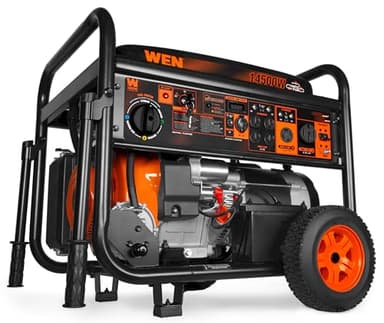
Free. Secure. Unsubscribe anytime.