The 10 Best Applique Embroidery Machines of 2026
- Verified Sales Volume
- Refund & Return Rates
- Real-world Performance
- Price-to-Value Ratio
- Product Ratings & Review Sentiment






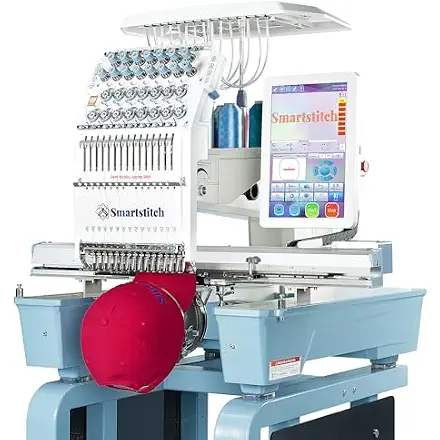


Different items demand different hardware, and this is the section where buyers most often discover their machine can't do the job they bought it for. Check that your intended projects are explicitly supported before you buy.
- Hat and Cap - Requires a cylindrical arm, a cap hoop, and a driver, which in practice means a multi-needle machine. Flat single-needle machines cannot properly stitch a structured cap.
- T-Shirt - Easy on nearly any machine, but knits stretch, so a stable hoop and cut-away stabilizer matter more than the machine itself.
- Monogramming - The most common use case. Built-in fonts and a 4x4 or 5x7 hoop handle it comfortably.
- Patches - Small fields work fine, though clean satin borders benefit from precise registration and a machine that holds tension well.
- Quilting - Wants the largest hoop you can get plus a wide throat if you're using a combo machine for piecing.
- Leather and Denim - Needs piercing power, appropriate needles, and the ability to slow the stitch speed down. Check that the machine tolerates heavy materials.
- Towels and Blankets - Thick, lofty fabrics need generous hoop clearance and topping stabilizer to keep stitches from sinking.
- Bags and Totes - Awkward shapes and seams; a removable embroidery arm or a smaller hoop helps you reach into the piece.
- 3D Puff - Foam-raised embroidery on caps, which realistically requires a multi-needle machine with strong penetration and clean trimming.
- Applique - Works on any machine, but on-screen design editing and accurate placement markers make the layered process far smoother.
Write down your top three projects and buy for the hardest one. Caps and 3D puff in particular are the dividing line between hobby machines and multi-needle equipment.
For monograms, pocket logos, patches, and hat fronts, a 4x4 hoop is enough. If you want real versatility, 5x7 is the practical minimum because it handles left-chest logos, kids' shirt fronts, and most designs you'll download. Jacket backs, quilt blocks, and large home decor pieces call for 8x12 or larger. As a rule, buy one size bigger than you think you need, since you can always stitch small in a large hoop but never the reverse without splitting the design.
Was this helpful?
Choose single-needle if embroidery is a hobby, your designs use only one or two colors, and budget is the main concern. Move up to multi-needle if you sell regularly, stitch multi-color logos, or want to embroider structured hats and 3D puff, which single-needle machines can't properly do. Multi-needle machines change colors automatically, so a ten-color job runs unattended instead of requiring you to re-thread at every step.
Was this helpful?
Entry-level portable and embroidery-only machines generally start a few hundred dollars, mid-range home models with larger hoops and touchscreens land in the low thousands, and multi-needle machines for small business use typically run several thousand and up. Commercial and industrial equipment goes considerably higher. Remember to budget beyond the machine itself for extra hoops, thread, stabilizer, needles, and possibly digitizing software, which can add a meaningful amount to your real total.
Was this helpful?
A combo is a smart choice if you have limited space or budget and want both functions in one purchase. The tradeoffs are that you'll swap the embroidery unit on and off between tasks, and hoop capacity is usually smaller than an embroidery-only machine at the same price. If you already own a sewing machine you're happy with, a dedicated embroidery-only model will give you better value and a cleaner workflow.
Was this helpful?
It matters most if you plan to edit designs at the machine rather than on a computer. A 5 inch or larger color touchscreen lets you see true color previews and confidently resize, rotate, and reposition your work. If you always prepare and finalize files in software before transferring them, a smaller screen is perfectly adequate and saves money with little practical downside.
Was this helpful?
Speed matters a lot for business use and very little for occasional gifts and monograms. Home machines commonly run 500 to 850 stitches per minute, while multi-needle and commercial models reach 1,000 SPM or more. Keep in mind that the advertised number is a maximum, not a constant, since caps, leather, and dense fills all require slowing down. A stable, well-built machine at moderate speed will out-produce a faster one that jams often.
Was this helpful?
Look for multiple hoop sizes, a starter thread set, assorted stabilizers, prewound bobbins, and a basic tool kit. If hats are on your list, confirm a cap hoop and driver are included, because buying them separately is a significant expense. Bundled embroidery or digitizing software and a machine stand also represent real value. Always compare what's in the box rather than just sticker prices, since accessories can quietly add hundreds to your total cost.
Was this helpful?
Brother, Janome, and Baby Lock are the strongest picks for home and hobby use thanks to reliable build quality, easy parts availability, and huge online learning communities. For small business and production work, Ricoma, Melco, and Bai are well-regarded multi-needle options with training and support behind them. Budget direct-to-consumer brands can offer a lot of features per dollar, but verify parts availability and customer support before committing, since downtime costs more than the initial savings.
Was this helpful?